From the chair
Most weeks, someone sits down in my chair and tells me they brush well. Usually, they do.
Then I dry a tooth with a little air, and a chalky white patch shows up near the gumline. Dentists call that a white spot lesion: enamel that has lost some mineral beneath an intact surface, before any cavity forms.
A few more questions, and we’re talking about dry mornings. Or a prescription that started around the same time.
Their brushing was fine. Nobody had ever asked about their saliva.
The short version
Here’s the idea in one line: saliva is the repair system for your enamel.
When saliva flow drops, your mouth loses part of its ability to put minerals back and to bring acid back toward neutral. Chronic dryness is linked to more decay and more mineral loss [5].
Brushing cleans. Saliva repairs. Most of us only ever check the first one.
Evidence tier: A. This is core oral physiology, laid out in major reviews [1, 2, 3]. The protocol below is how I use it day to day, and where a step rests on thinner evidence, I’ll tell you.
How the repair works
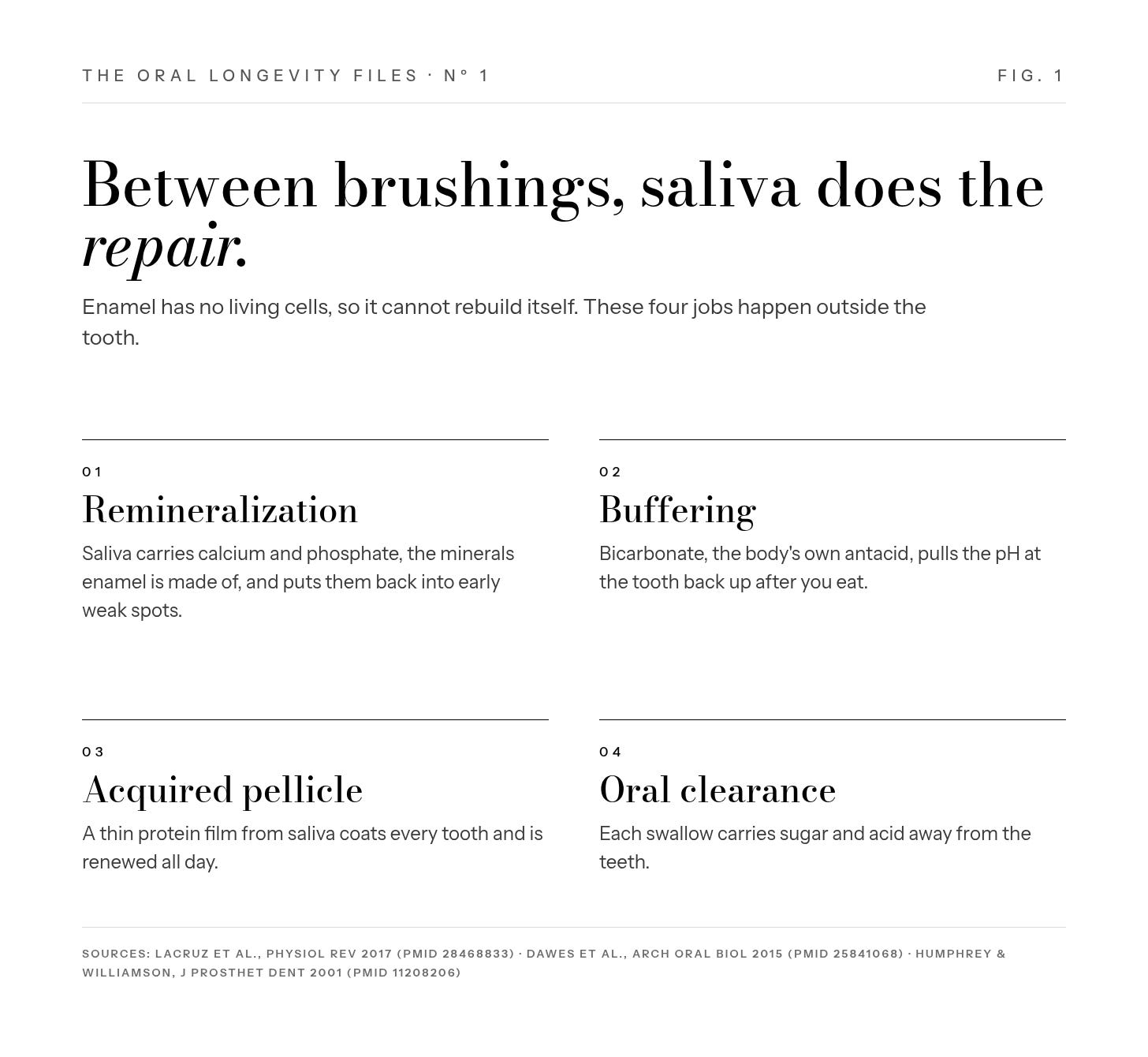
Enamel is the hardest tissue in your body. The cells that built it are gone by the time the tooth comes in [1].
So enamel can’t grow back the way skin or bone does. Any repair has to come from outside the tooth, and most of it comes from saliva.
The clinical word is remineralization. Here’s what that looks like in everyday terms.
Minerals. Saliva is loaded with calcium and phosphate, the same minerals your enamel is made of. It’s supersaturated with them, so they tend to move back into early weak spots [2].
Buffering. Bicarbonate in saliva works like a built-in antacid and pulls the pH at the tooth back up after you eat [2, 3].
A protective film. Saliva lays down a thin protein layer on every tooth, called the acquired pellicle, and renews it all day.
Clearance. Each swallow carries sugar and acid away. Dentists call this oral clearance [2, 4].
Saliva also sets the conditions for your oral microbiome, the community of bacteria, fungi and viruses living in saliva and in the plaque film on your teeth [18]. When that community stays in balance with you, the mouth stays healthier. When it tips out of balance, which researchers call dysbiosis, that’s the starting point for cavities and gum disease [18].
I like to think of all this as a reserve.
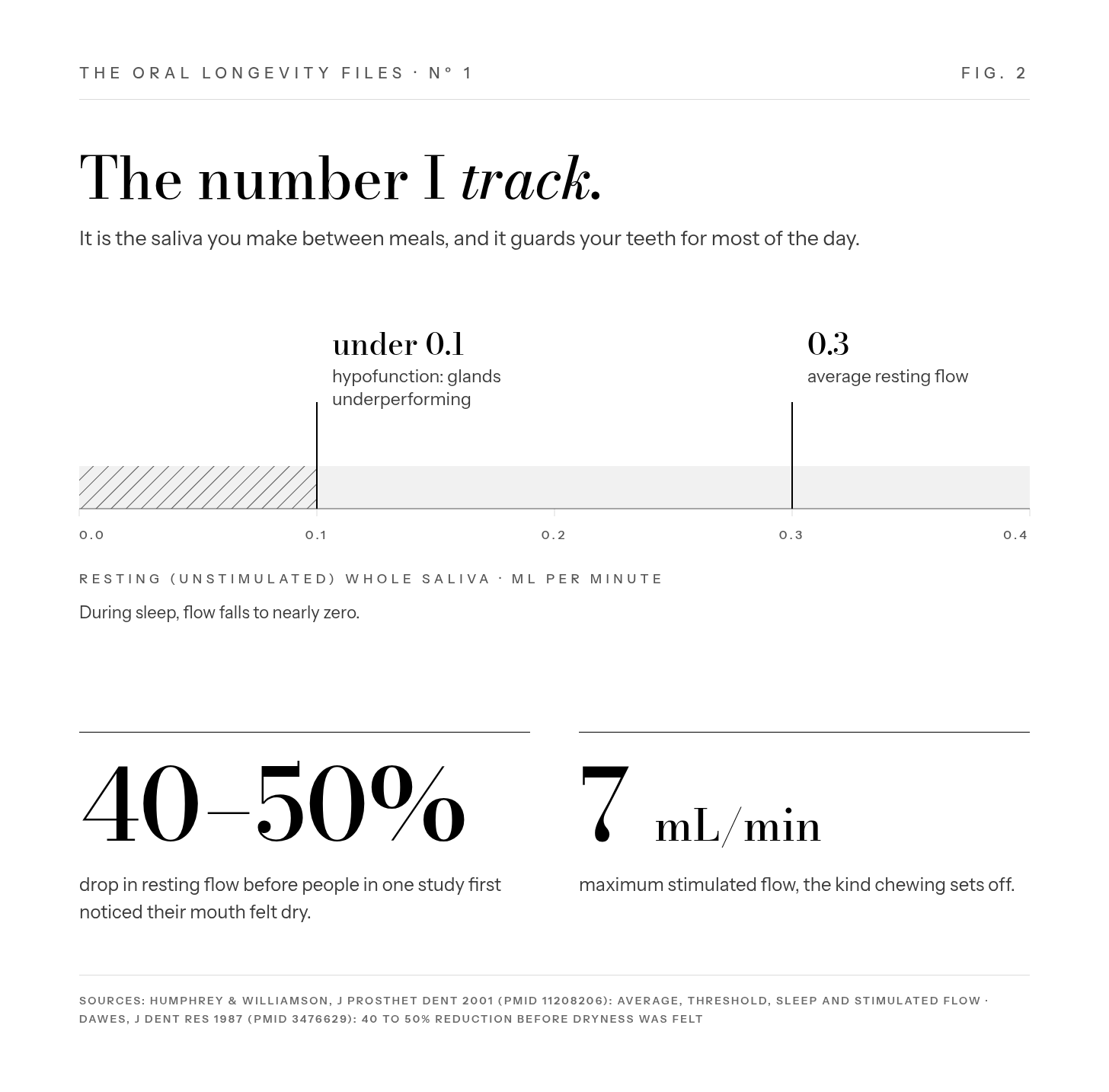
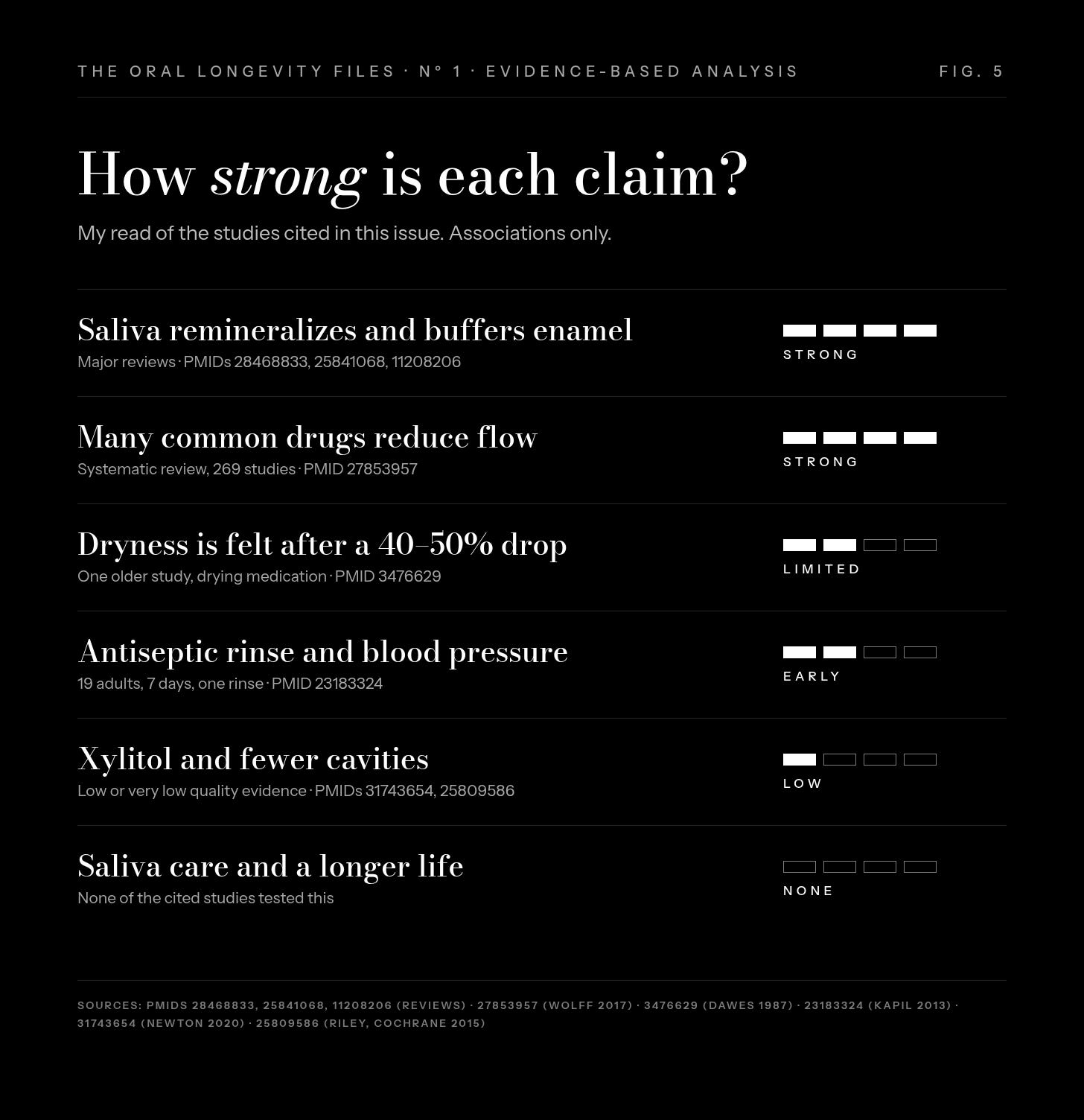
With healthy flow, repair keeps up with daily wear. When flow runs low, damage can get ahead long before you feel anything. In one classic study of people given a drying medication, they only noticed their mouth was dry after their resting flow had fallen by about 40 to 50 percent [4].
In one study, people only noticed a dry mouth after their resting flow fell by about 40 to 50 percent.
This is one piece of the framework I call oral longevity.
Oral Longevity is the clinical framework through which oral health, airway function, and perioral structure are understood as primary determinants of the rate and quality of human aging. Saliva sits in the Function pillar.
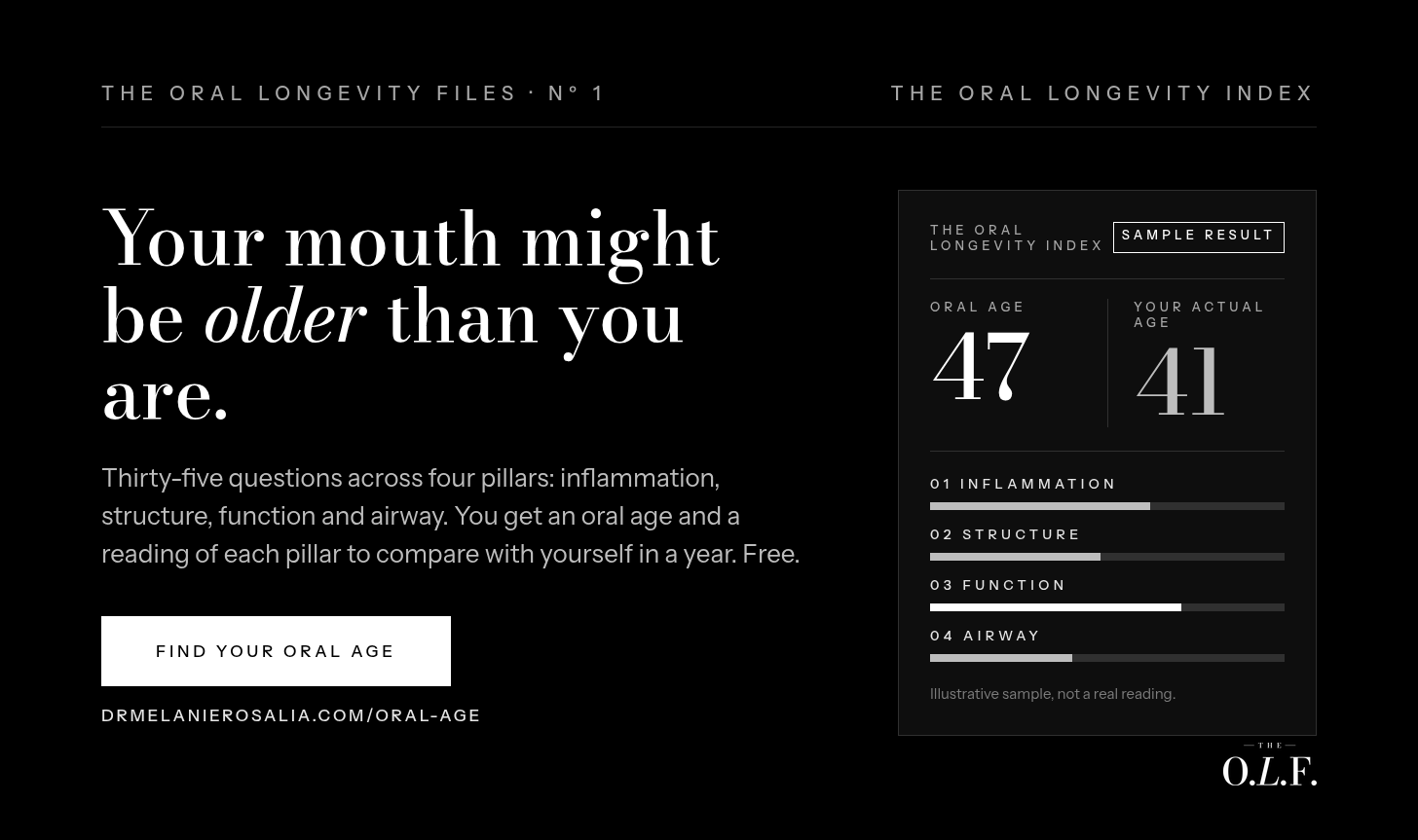
Take the free Oral Longevity Index
My daily saliva protocol
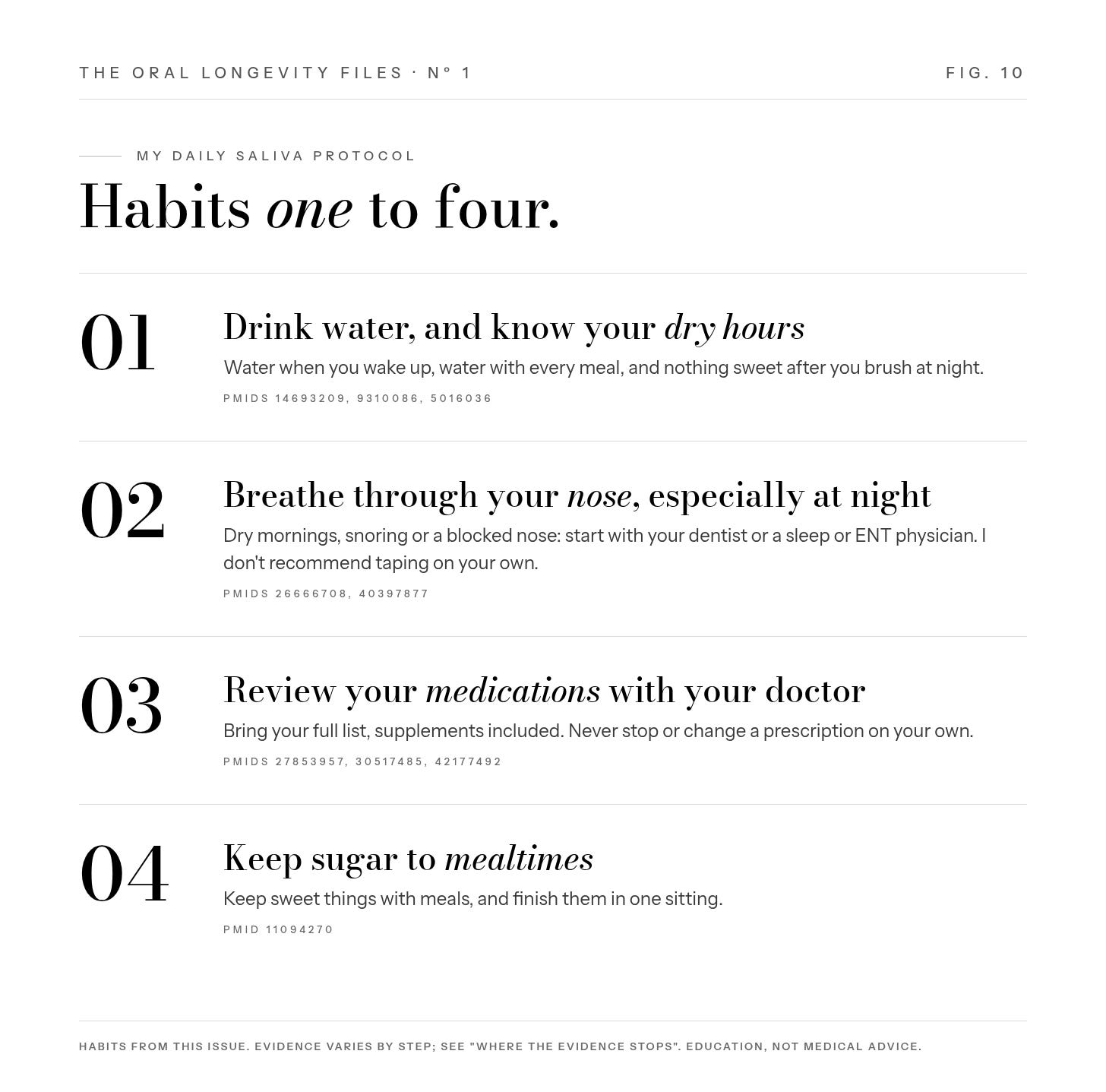
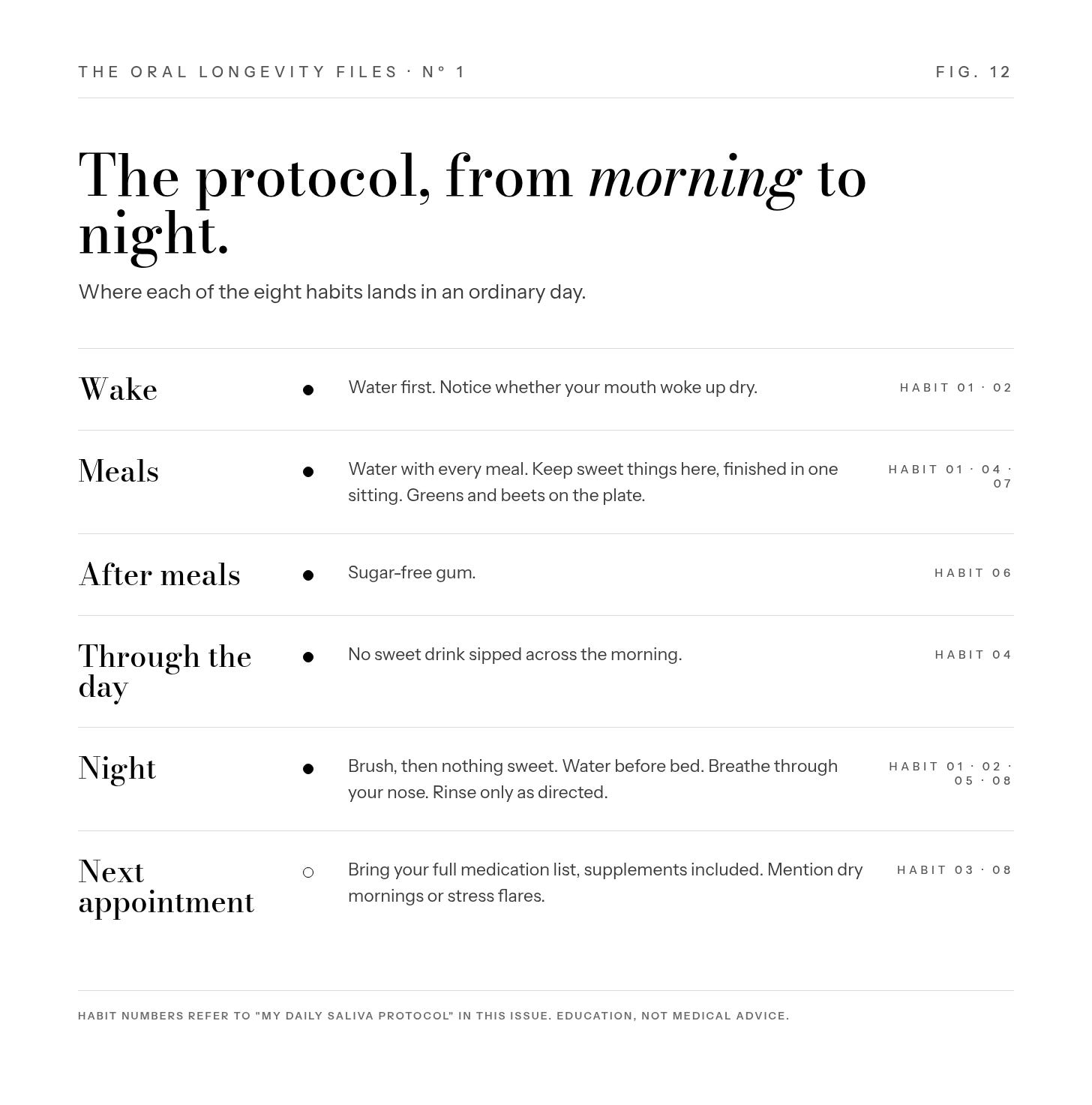
Most of what dries a mouth out comes back to a handful of daily inputs: what you drink, how you breathe, what you eat and when, how you sleep, and what’s in your medicine cabinet. So that’s where I start. Here are the eight habits I walk people through.
1. Drink water, and know your dry hours
Saliva is mostly water, so this one is simple. In a lab study of 12 men who exercised in the heat until mildly dehydrated, saliva flow went down as they lost body water [19]. In healthy adults, young and older, a day without food or drink lowered flow, and resting flow still hadn’t fully recovered after fluids were replaced [8].
Timing matters too. Saliva follows a circadian rhythm, a 24-hour cycle [7], and during sleep, flow falls to nearly zero [3]. That’s why mornings are often your driest window, and why something sweet right before bed costs your teeth more. What I suggest: water when you wake up, water with every meal, and nothing sweet after you brush at night.
If dryness sticks around, ask your dentist for a simple resting flow measurement. The average is about 0.3 mL per minute, and under 0.1 mL per minute is called hypofunction, meaning the glands are underperforming [3, 6].
Two words get mixed up here. Xerostomia is the feeling of a dry mouth. Hyposalivation is flow that measures low [5]. They don’t always travel together.
2. Breathe through your nose, especially at night
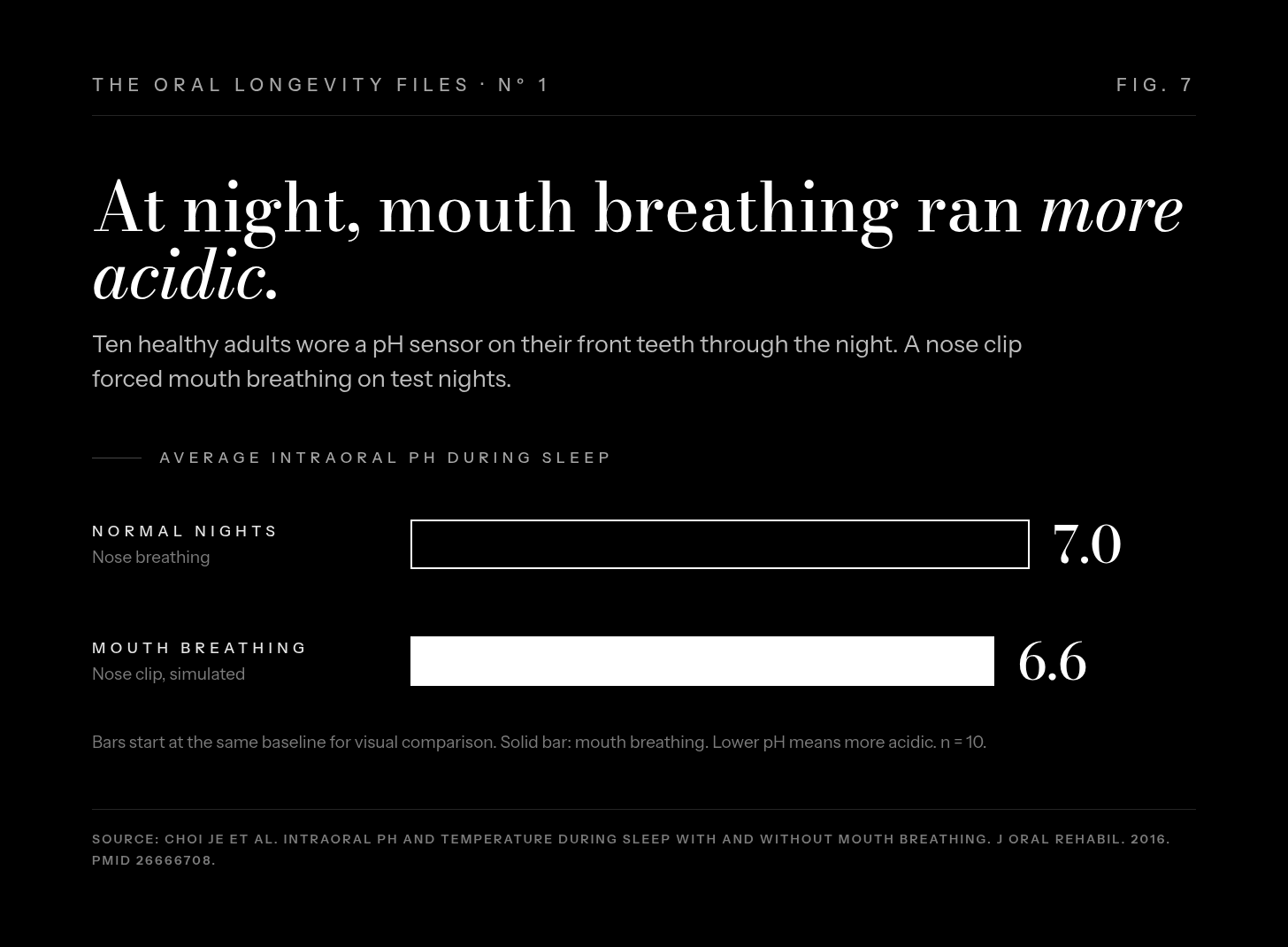
Mouth breathing dries the mouth, and sleep is when it matters most. In a small study, 10 healthy adults wore a pH sensor on their front teeth through the night. With a nose clip forcing them to breathe through the mouth, average pH during sleep was 6.6, compared with 7.0 on normal nights [20]. In plain terms, the mouth ran more acidic, for longer.
About mouth taping, since it’s all over social media. A 2025 systematic review found 10 studies with a total of 213 patients. Two showed improvement in sleep apnea markers, others showed no difference, and the authors flagged a potentially serious risk of harm, including suffocation risk when the nose is blocked [21].
So I don’t recommend taping on your own. If you wake up with a dry mouth, snore, or can’t breathe easily through your nose, start with your dentist or a sleep or ENT physician and look for the cause.
3. Review your medications with your doctor
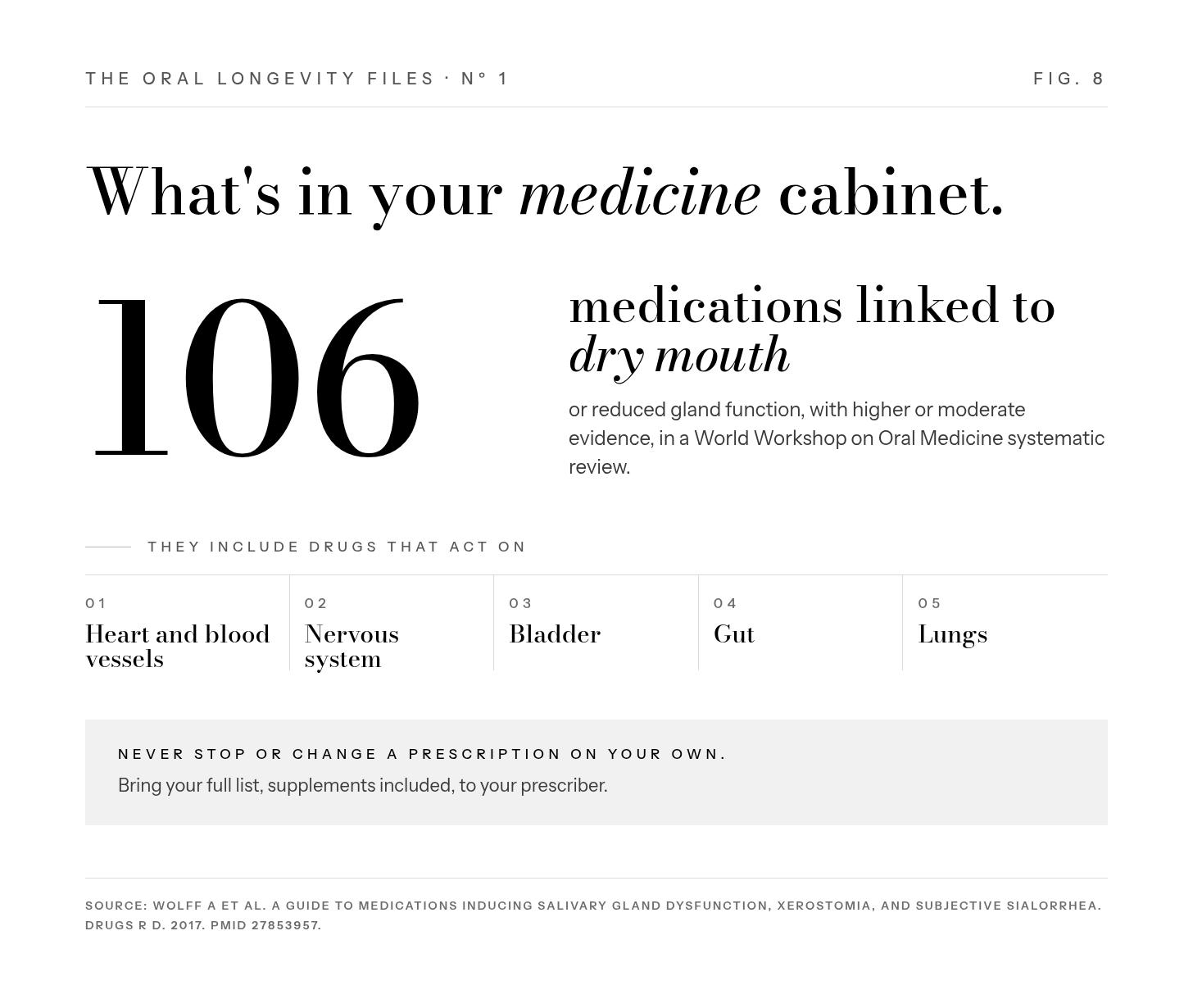
A systematic review from the World Workshop on Oral Medicine found higher or moderate evidence linking 106 medications to dry mouth or reduced gland function [9]. They include drugs that act on the heart and blood vessels, the nervous system, the bladder, the gut and the lungs.
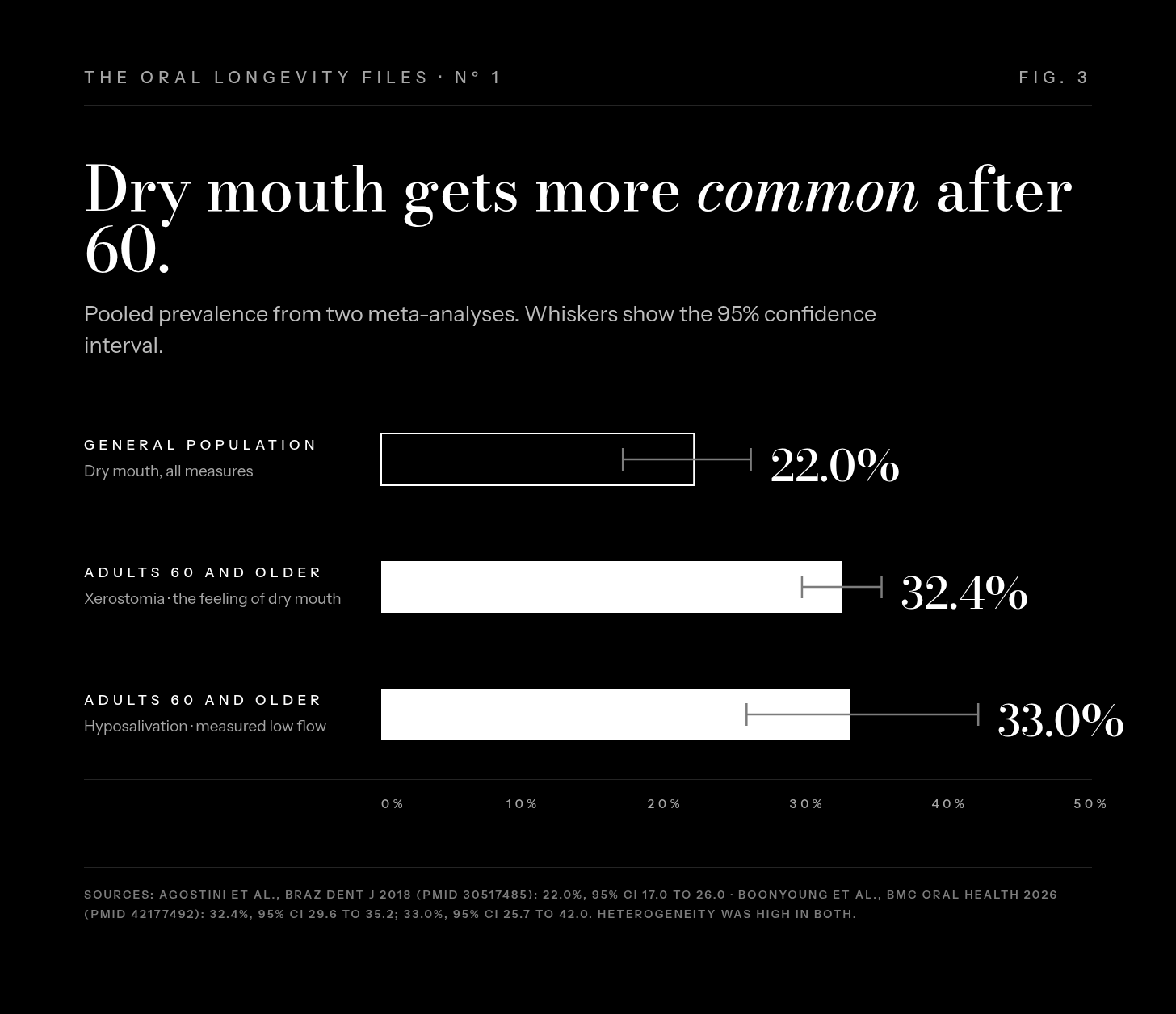
About 1 in 5 adults reports dry mouth [10]. In adults 60 and older, a 2026 meta-analysis put it at about one-third: 32.4 percent for the feeling of dry mouth and 33.0 percent for measured low flow [11].
Please never stop or change a prescribed medication on your own. Bring your full list, supplements included, to your prescriber and ask whether dry mouth is a known effect and whether an alternative makes sense for you.
4. Keep sugar to mealtimes
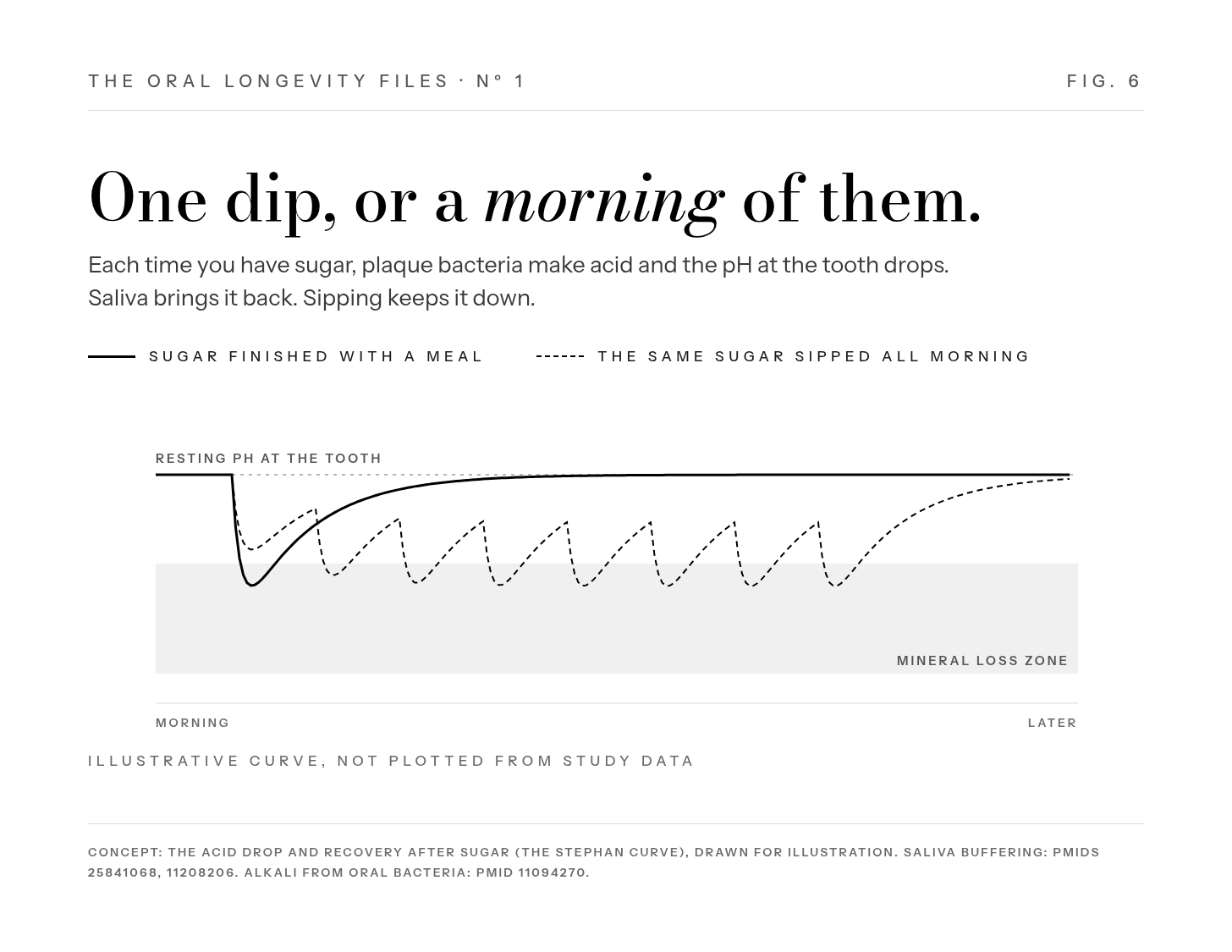
Every time you have sugar, plaque bacteria ferment it into acid and the pH at the tooth surface drops. Saliva has to bring it back.
Some of your own mouth bacteria help, turning urea and arginine from saliva into ammonia, an alkali that neutralizes acid [12].
A sweet coffee sipped across a whole morning keeps that acid cycle going far longer than the same sugar finished with a meal. Keep sweet things with meals, and finishthem in one sitting.
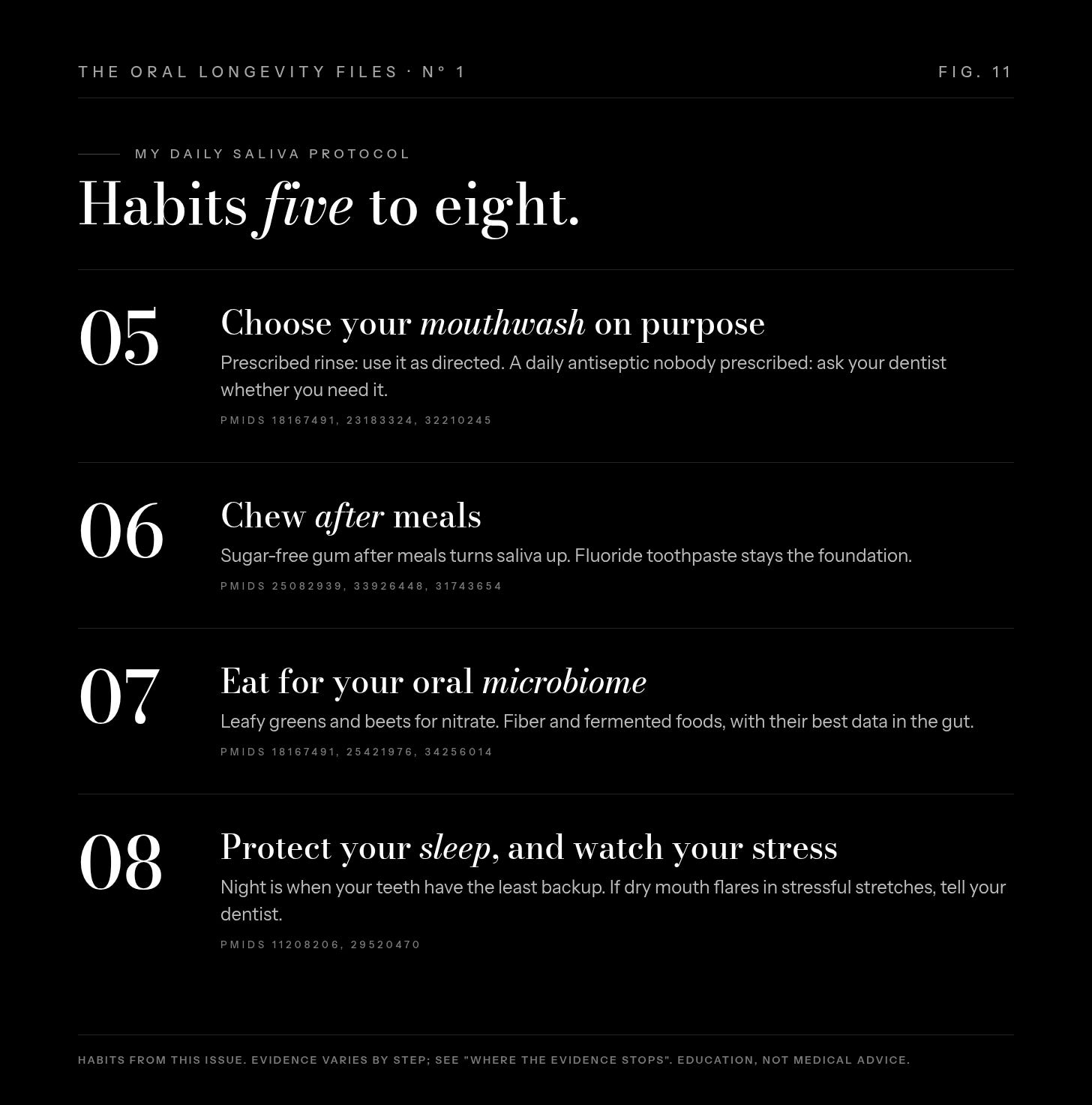
5. Choose your mouthwash on purpose
Bacteria on your tongue convert nitrate from vegetables into nitrite. Your body turns some of that into nitric oxide, a molecule that helps blood vessels relax. Researchers call this the nitrate-nitrite-nitric oxide pathway [13].
In a study of 19 healthy adults, seven days of a chlorhexidine rinse cut the mouth’s nitrite production by 90 percent, and blood pressure went up by 2 to 3.5 mmHg [14]. In another study of 36 healthy adults, a week of chlorhexidine shifted the saliva microbiome and was associated with more acidic saliva, lower buffering and lower nitrite [22].
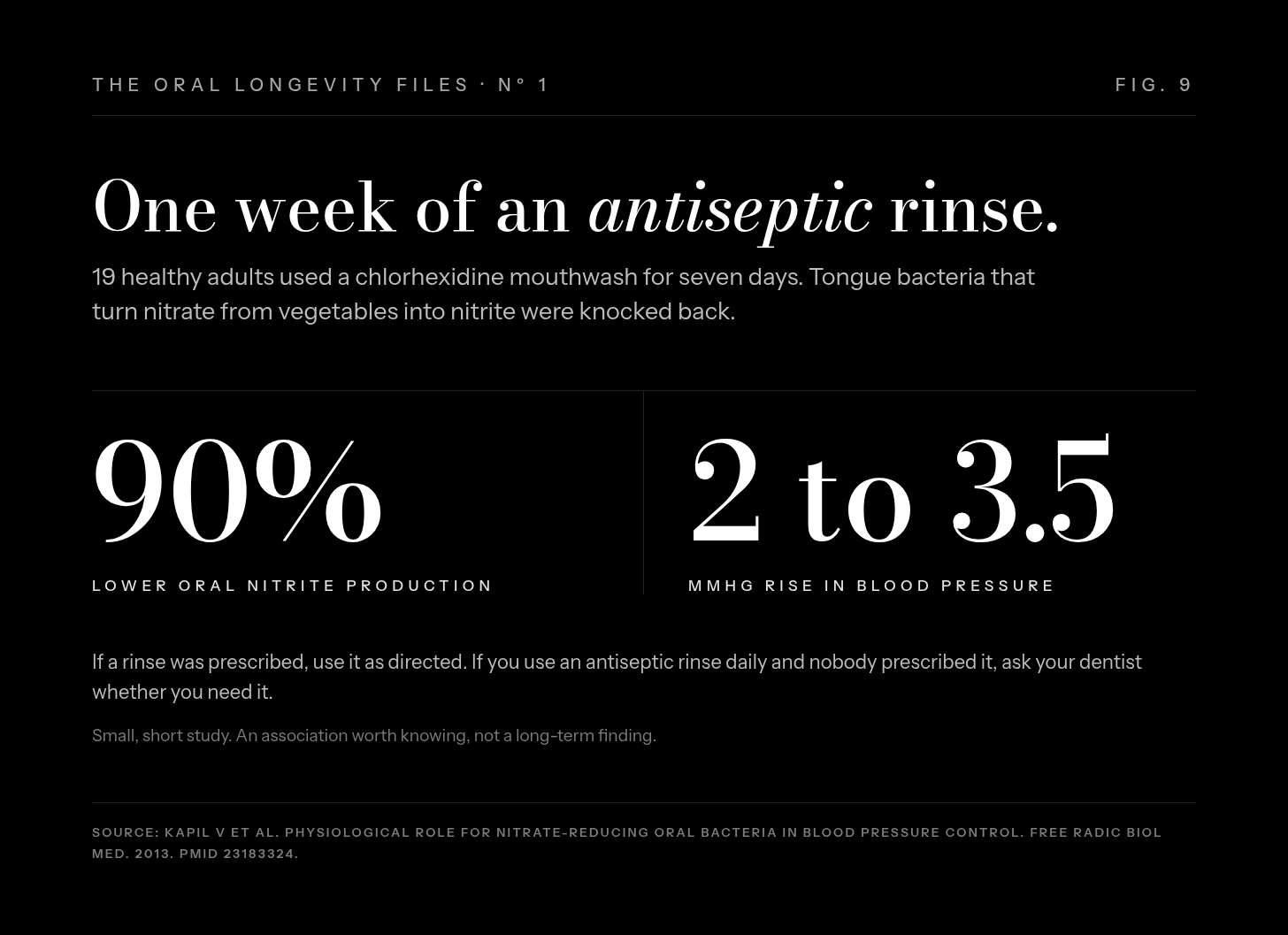
Chlorhexidine doesn’t sort the helpful bacteria from the harmful ones. If it was prescribed, keep using it as directed. If you use an antiseptic rinse every day and nobody prescribed it, ask your dentist whether you need it. People ask me about alcohol-based rinses too. I haven’t found trial evidence strong enough to put a number on them, so I’m leaving them out of this issue.
6. Chew after meals
Chewing is one of the simplest ways to turn saliva up. Sugar-free gum after meals raises flow [5], and stimulated flow can reach as much as 7 mL per minute [3].
In meta-analyses, xylitol gum lowered levels of Streptococcus mutans, a bacterium closely tied to cavities [15], and xylitol-only gum was linked to about a third fewer new cavities [16]. The authors call that evidence tentative, so gum is a helper in my book. Fluoride toothpaste stays the foundation.
7. Eat for your oral microbiome
Feed the helpful bacteria. Leafy greens and beets are rich sources of nitrate, the fuel for that nitrate-nitrite-nitric oxide pathway [13]. In a 4-week trial in 68 people with high blood pressure, daily dietary nitrate from beetroot juice was associated with a drop in clinic blood pressure of 7.7/2.4 mmHg compared with placebo [23]. That was a juice dose in a specific group, so I read it as one more reason to eat your greens. It isn’t a treatment plan.
Fiber and fermented foods have their best data in the gut. In a 17-week Stanford trial with 18 people per diet, a high-fermented-food diet steadily increased gut microbiota diversity and decreased inflammatory markers [24]. That trial measured the gut. We don’t yet know what it means for the mouth, so I describe it and I don’t promise it.
8. Protect your sleep, and watch your stress
Flow falls to nearly zero during sleep [3], so night is when your teeth have the least backup. Nasal breathing, water before bed and nothing sweet after brushing all help here.
Stress is more nuanced. In 114 patients at a saliva clinic, higher perceived stress was linked to feeling more dry mouth and being more bothered by it, yet the researchers found no actual drop in measured flow [25]. So stress may change how dry your mouth feels even when the flow number holds. If dry mouth flares in stressful stretches, mention it to your dentist.
Where the evidence stops
A resting flow number is a screen. It opens a conversation with your dentist and diagnoses nothing. Your own trend over time says more than one reading held up against an average [3].
Several studies here are small. The mouth breathing study had 10 people and simulated mouth breathing with a nose clip [20]. The stress study came from a single clinic and found no difference in measured flow [25]. The nitrate trial used beetroot juice in people with high blood pressure [23], and the fermented food trial measured the gut [24].
The 40 to 50 percent figure comes from one older study of people given a drying drug [4]. It shows the idea well and tells you little about your personal threshold.
The mouthwash finding comes from 19 people using one prescription-strength rinse for a week [14]. It’s an association worth knowing about. It can’t tell us whether everyday mouthwash use affects blood pressure over years. The second chlorhexidine study was not randomized [22].
The Cochrane review rated most of the xylitol evidence as low or very low quality [17], so I describe it, and I don’t promise it.
And nothing here shows that caring for your saliva adds years to your life. The studies here are about teeth.
So when someone in my chair tells me they brush well, I believe them.
Then I ask how their mouth feels when they wake up. And we build the routine from there.
If you want this protocol to be part of a plan for your mouth that runs in decades, that is what The Oral Longevity Reserve™ is for. It is my membership practice in Miami, by invitation. Request an invitation at orallongevityreserve.com.
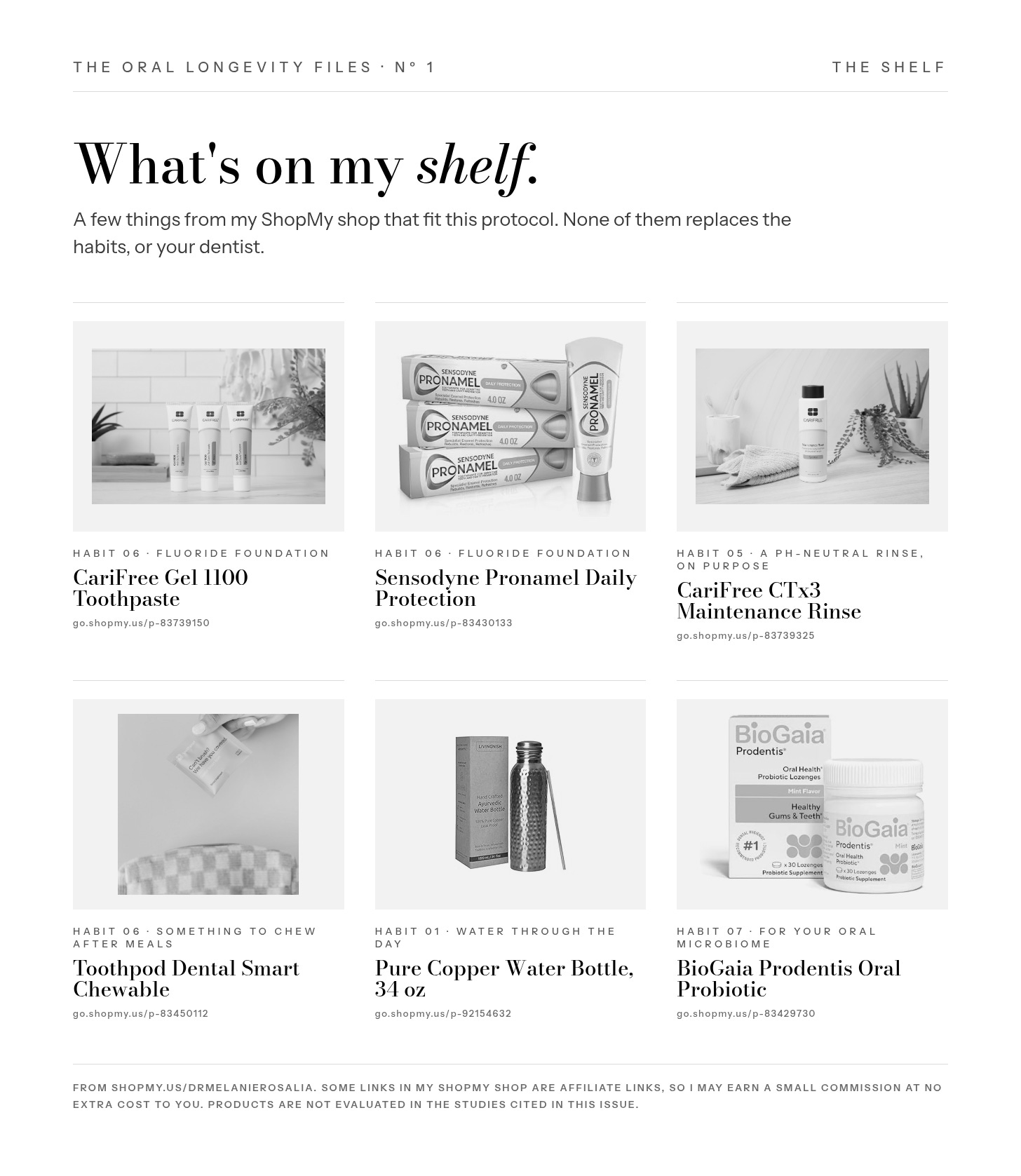
Shop the protocol:
Sensodyne Pronamel Daily Protection
CariFree CTx3 Maintenance Rinse
Toothpod Dental Smart Chewable
Pure Copper Water Bottle 34 oz
BioGaia Prodentis Oral Probiotic
I may earn a commission from these links.
Dr. Melanie Silvestrini, DMD, FICOI
References
[1] Lacruz RS, Habelitz S, Wright JT, Paine ML. Dental enamel formation and implications for oral health and disease. Physiol Rev. 2017;97(3):939-993. PMID 28468833.
[2] Dawes C, Pedersen AML, Villa A, et al. The functions of human saliva: a review sponsored by the World Workshop on Oral Medicine VI. Arch Oral Biol. 2015;60(6):863-874. PMID 25841068.
[3] Humphrey SP, Williamson RT. A review of saliva: normal composition, flow, and function. J Prosthet Dent. 2001;85(2):162-169. PMID 11208206.
[4] Dawes C. Physiological factors affecting salivary flow rate, oral sugar clearance, and the sensation of dry mouth in man. J Dent Res. 1987;66 Spec No:648-653. PMID 3476629.
[5] Plemons JM, Al-Hashimi I, Marek CL; ADA Council on Scientific Affairs. Managing xerostomia and salivary gland hypofunction. J Am Dent Assoc. 2014;145(8):867-873. PMID 25082939.
[6] Navazesh M, Kumar SKS. Measuring salivary flow: challenges and opportunities. J Am Dent Assoc. 2008;139 Suppl:35S-40S. PMID 18460678.
[7] Dawes C. Circadian rhythms in human salivary flow rate and composition. J Physiol. 1972;220(3):529-545. PMID 5016036.
[8] Ship JA, Fischer DJ. The relationship between dehydration and parotid salivary gland function in young and older healthy adults. J Gerontol A Biol Sci Med Sci. 1997;52(5):M310-M319. PMID 9310086.
[9] Wolff A, Joshi RK, Ekström J, et al. A guide to medications inducing salivary gland dysfunction, xerostomia, and subjective sialorrhea. Drugs R D. 2017;17(1):1-28. PMID 27853957.
[10] Agostini BA, Cericato GO, Silveira ER, et al. How common is dry mouth? Systematic review and meta-regression analysis of prevalence estimates. Braz Dent J. 2018;29(6):606-618. PMID 30517485.
[11] Boonyoung K, Buajeeb W, Panpradit N, Na-Ek N, Pimolbutr K. Prevalence of xerostomia and hyposalivation in older adults: a systematic review and meta-analysis. BMC Oral Health. 2026;26(1):1125. PMID 42177492.
[12] Burne RA, Marquis RE. Alkali production by oral bacteria and protection against dental caries. FEMS Microbiol Lett. 2000;193(1):1-6. PMID 11094270.
[13] Lundberg JO, Weitzberg E, Gladwin MT. The nitrate-nitrite-nitric oxide pathway in physiology and therapeutics. Nat Rev Drug Discov. 2008;7(2):156-167. PMID 18167491.
[14] Kapil V, Haydar SM, Pearl V, et al. Physiological role for nitrate-reducing oral bacteria in blood pressure control. Free Radic Biol Med. 2013;55:93-100. PMID 23183324.
[15] Nasseripour M, Newton JT, Warburton F, et al. A systematic review and meta-analysis of the role of sugar-free chewing gum on Streptococcus mutans. BMC Oral Health. 2021;21(1):217. PMID 33926448.
[16] Newton JT, Awojobi O, Nasseripour M, et al. A systematic review and meta-analysis of the role of sugar-free chewing gum in dental caries. JDR Clin Trans Res. 2020;5(3):214-223. PMID 31743654.
[17] Riley P, Moore D, Ahmed F, Sharif MO, Worthington HV. Xylitol-containing products for preventing dental caries in children and adults. Cochrane Database Syst Rev. 2015;(3):CD010743. PMID 25809586.
[18] Samaranayake L, Matsubara VH. Normal oral flora and the oral ecosystem. Dent Clin North Am. 2017;61(2):199-215. PMID 28317562.
[19] Walsh NP, Montague JC, Callow N, Rowlands AV. Saliva flow rate, total protein concentration and osmolality as potential markers of whole body hydration status during progressive acute dehydration in humans. Arch Oral Biol. 2004;49(2):149-154. PMID 14693209.
[20] Choi JE, Waddell JN, Lyons KM, Kieser JA. Intraoral pH and temperature during sleep with and without mouth breathing. J Oral Rehabil. 2016;43(5):356-363. PMID 26666708.
[21] Rhee J, Iansavitchene A, Mannala S, Graham ME, Rotenberg B. Breaking social media fads and uncovering the safety and efficacy of mouth taping in patients with mouth breathing, sleep disordered breathing, or obstructive sleep apnea: a systematic review. PLoS One. 2025;20(5):e0323643. PMID 40397877.
[22] Bescos R, Ashworth A, Clarke C, et al. Effects of chlorhexidine mouthwash on the oral microbiome. Sci Rep. 2020;10(1):5254. PMID 32210245.
[23] Kapil V, Khambata RS, Robertson A, Caulfield MJ, Ahluwalia A. Dietary nitrate provides sustained blood pressure lowering in hypertensive patients: a randomized, phase 2, double-blind, placebo-controlled study. Hypertension. 2015;65(2):320-327. PMID 25421976.
[24] Wastyk HC, Fragiadakis GK, Perelman D, et al. Gut-microbiota-targeted diets modulate human immune status. Cell. 2021;184(16):4137-4153.e14. PMID 34256014.
[25] Bulthuis MS, Jan Jager DH, Brand HS. Relationship among perceived stress, xerostomia, and salivary flow rate in patients visiting a saliva clinic. Clin Oral Investig. 2018;22(9):3121-3127. PMID 29520470.
About Dr. Melanie
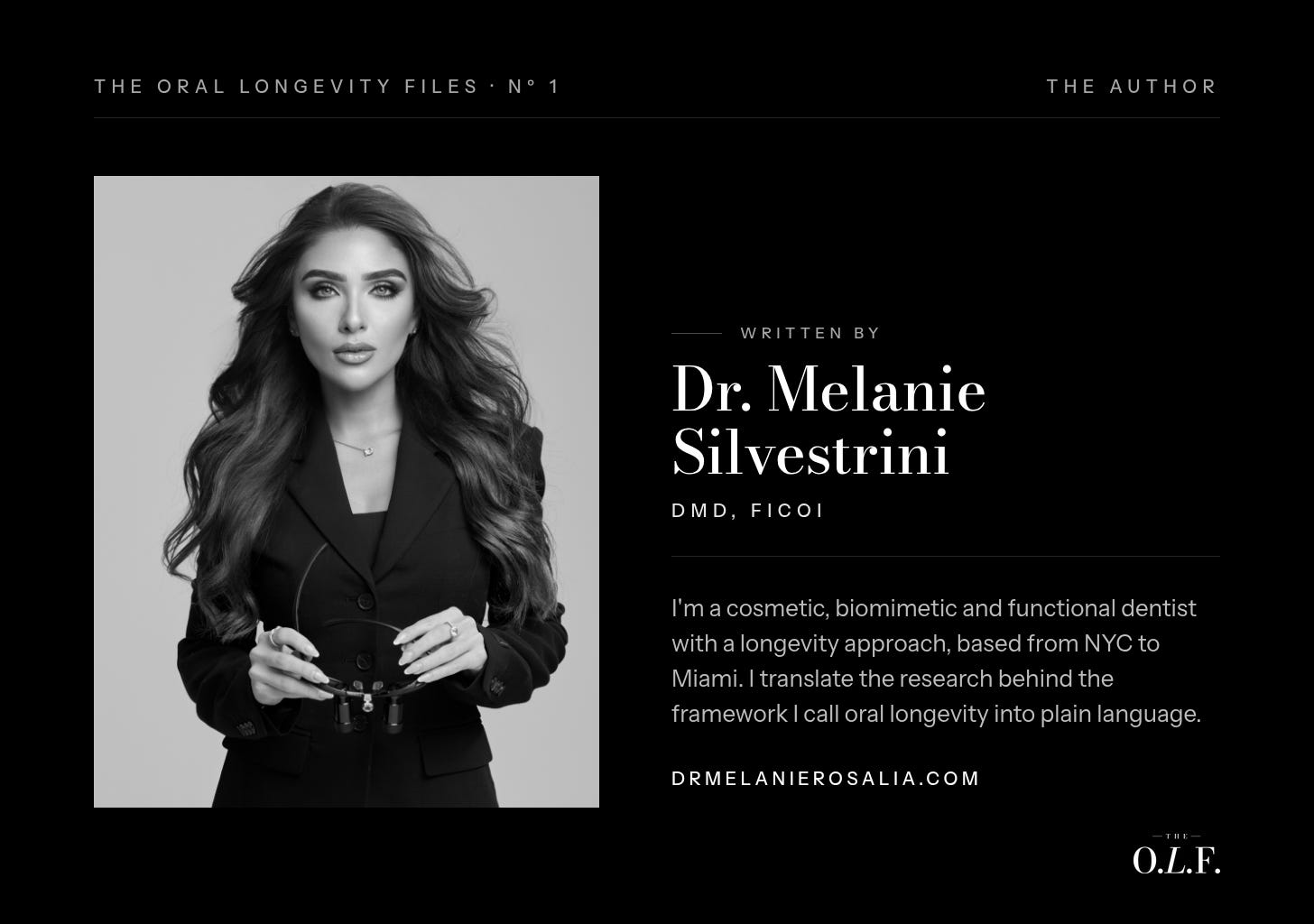
I’m Dr. Melanie Silvestrini, DMD, FICOI, a cosmetic and implant dentist in Miami. I write The Oral Longevity Files to translate the research behind the framework I call oral longevity into plain language you can bring to your next dental visit. I also host the Doctorate Domain podcast.
Website: drmelanierosalia.com
Instagram: @dr.melanierosalia
Some links in my ShopMy shop are affiliate links, so I may earn a small commission if you buy through them, at no extra cost to you.
© 2026 Dr. Melanie Silvestrini. The Oral Longevity Files. Education, not medical advice.