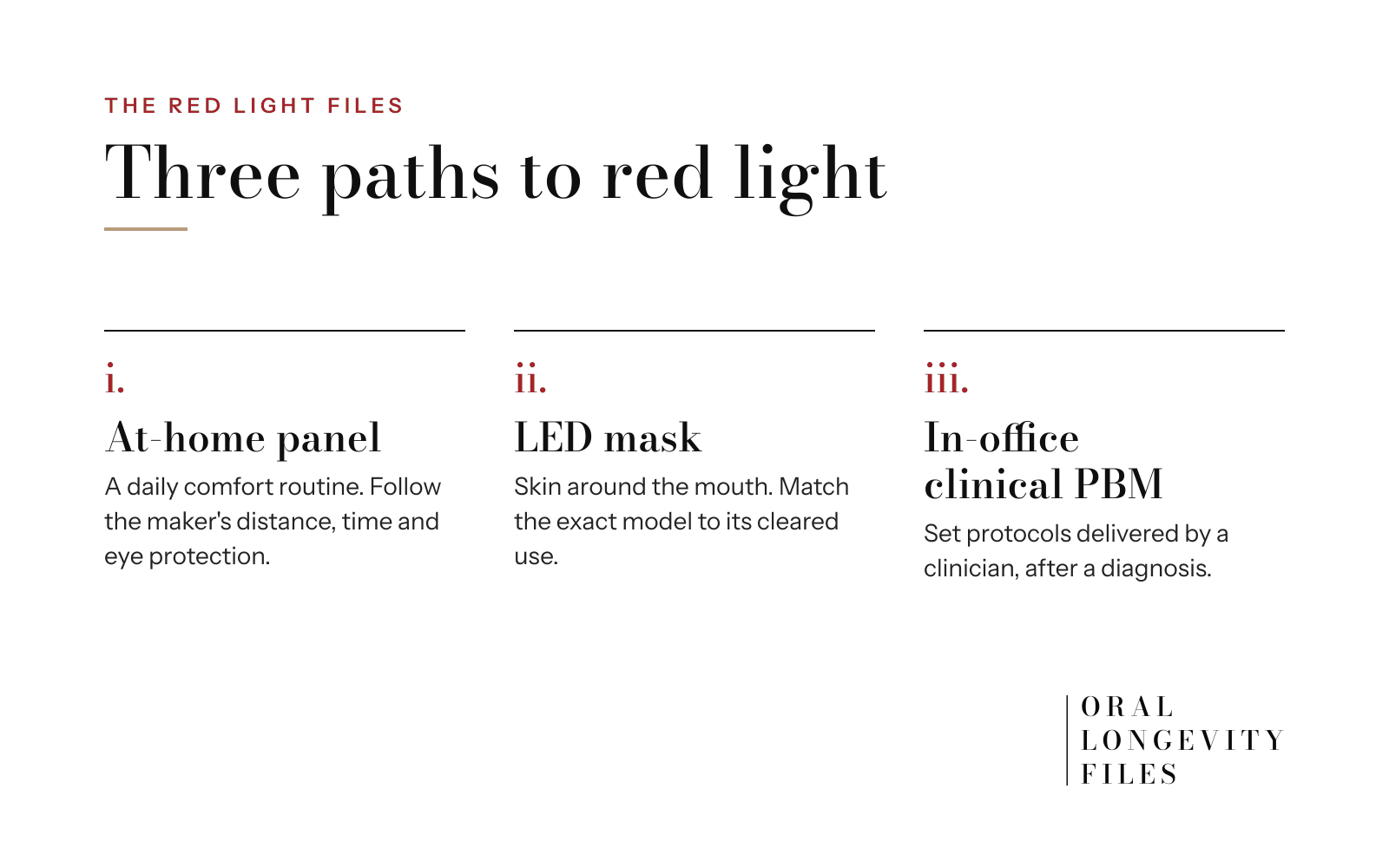
Red-light therapy can mean a panel in your bathroom, a mask on your sofa or a clinician treating precise sites inside the mouth.
Yet the same color of light doesn't mean the same treatment.
I'm Dr. Melanie Silvestrini, an aesthetic and functional dentist. I wrote this issue of The Oral Longevity Files so you can tell these three uses of red light apart, see what the devices can reasonably offer, and know which purchases you can skip.
In this issue
Clinical PBM vs at-home red light
PBM means photobiomodulation: using light to produce a biological response. Both clinical and home devices can use it. The difference is the indication, delivery and protocol.
A clinician can target defined oral sites with a probe, select the dose and monitor a specific condition. A home mask or panel usually exposes a broader external area. Neither setting, by itself, tells you how strong the evidence is.
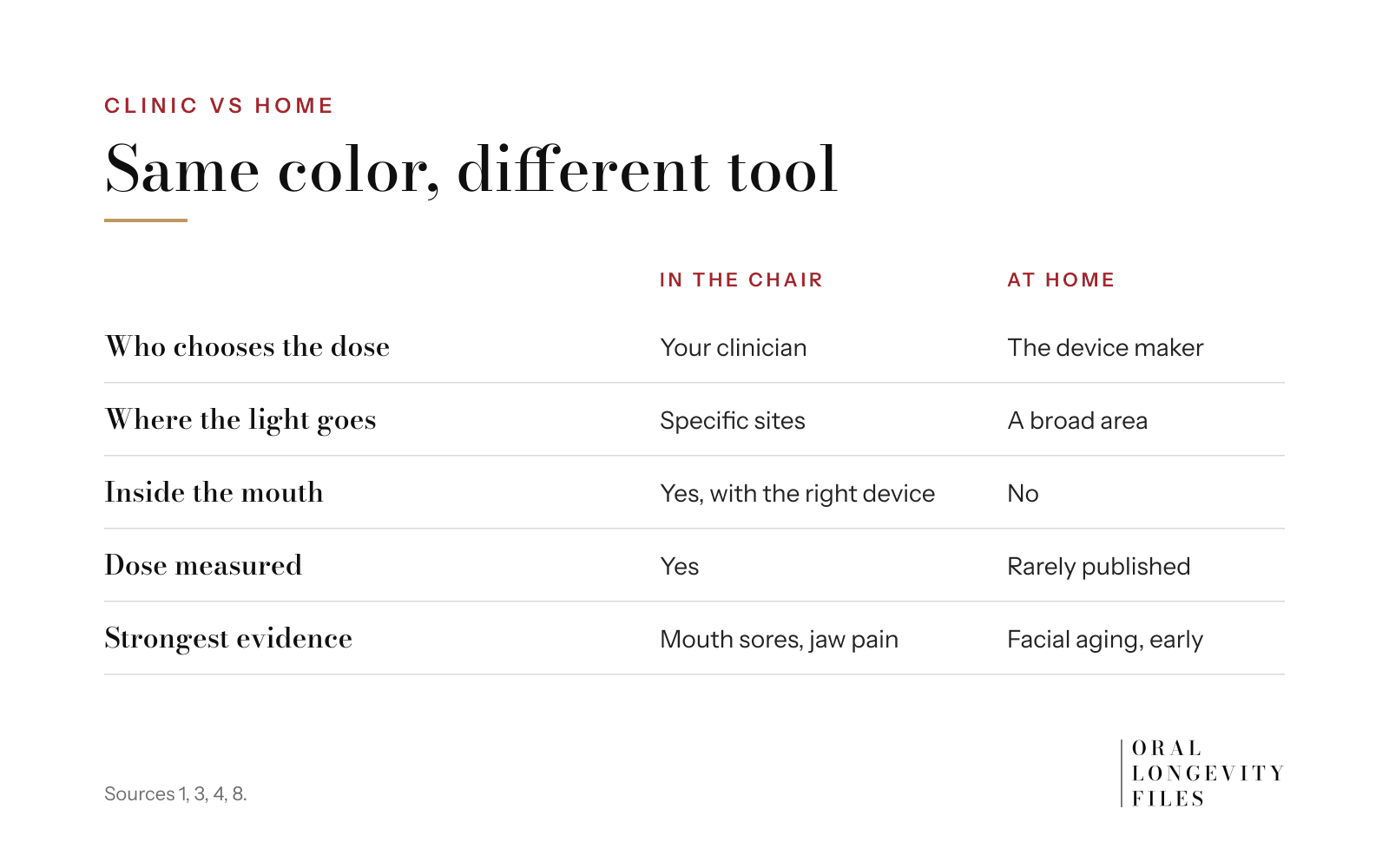
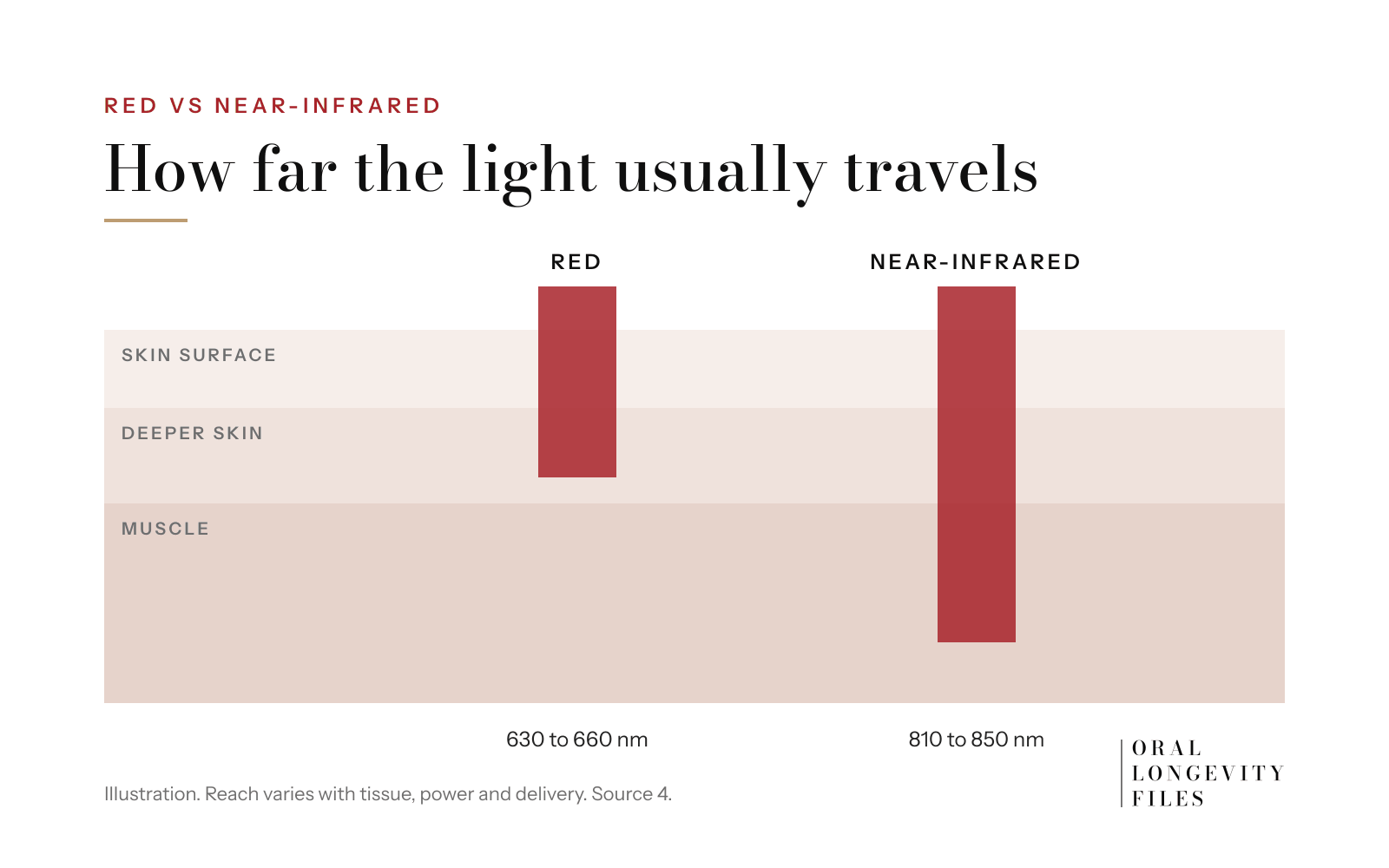
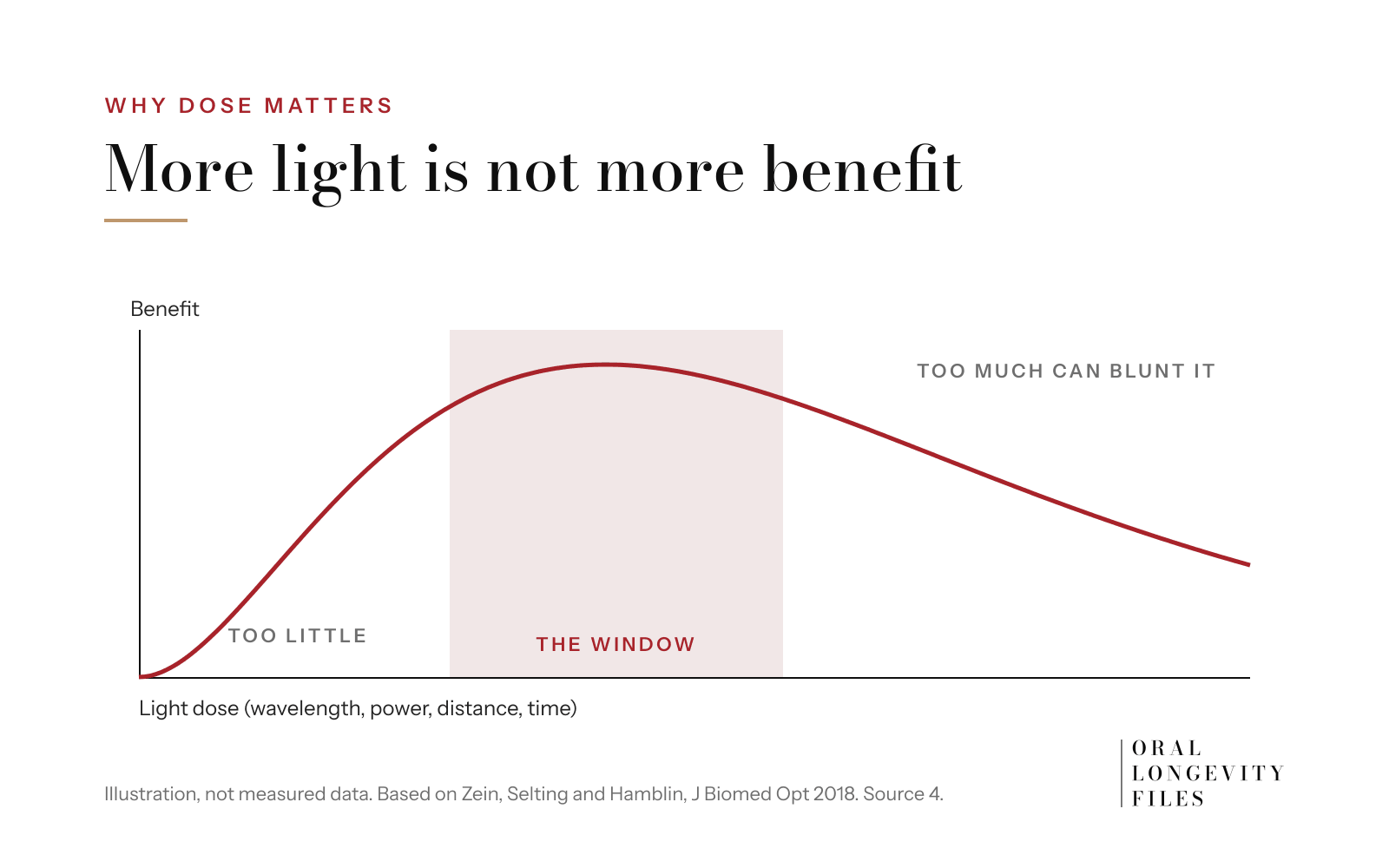
Irradiance is power per area, measured in mW/cm². Dose, here meaning radiant exposure at the surface, is energy per area, measured in J/cm². Time, distance, spot size and light mode change the exposure. The dose at the surface is different from the energy reaching deeper tissue. [4]
For context, one guideline protocol uses 632.8 nm, 24 mW/cm² and 125 seconds per site, delivering 3 J/cm². It also specifies the spot area, number of sites and timing through radiotherapy. You cannot recreate that protocol by standing in front of a panel. [1]
"Medical-grade" is not a universal evidence rating. Some home devices have an FDA-cleared indication. Others make broad wellness claims. Check the exact model, its authorized use and the human study separately.
What the evidence points to, in brief
If you only have a few minutes, this is the map.
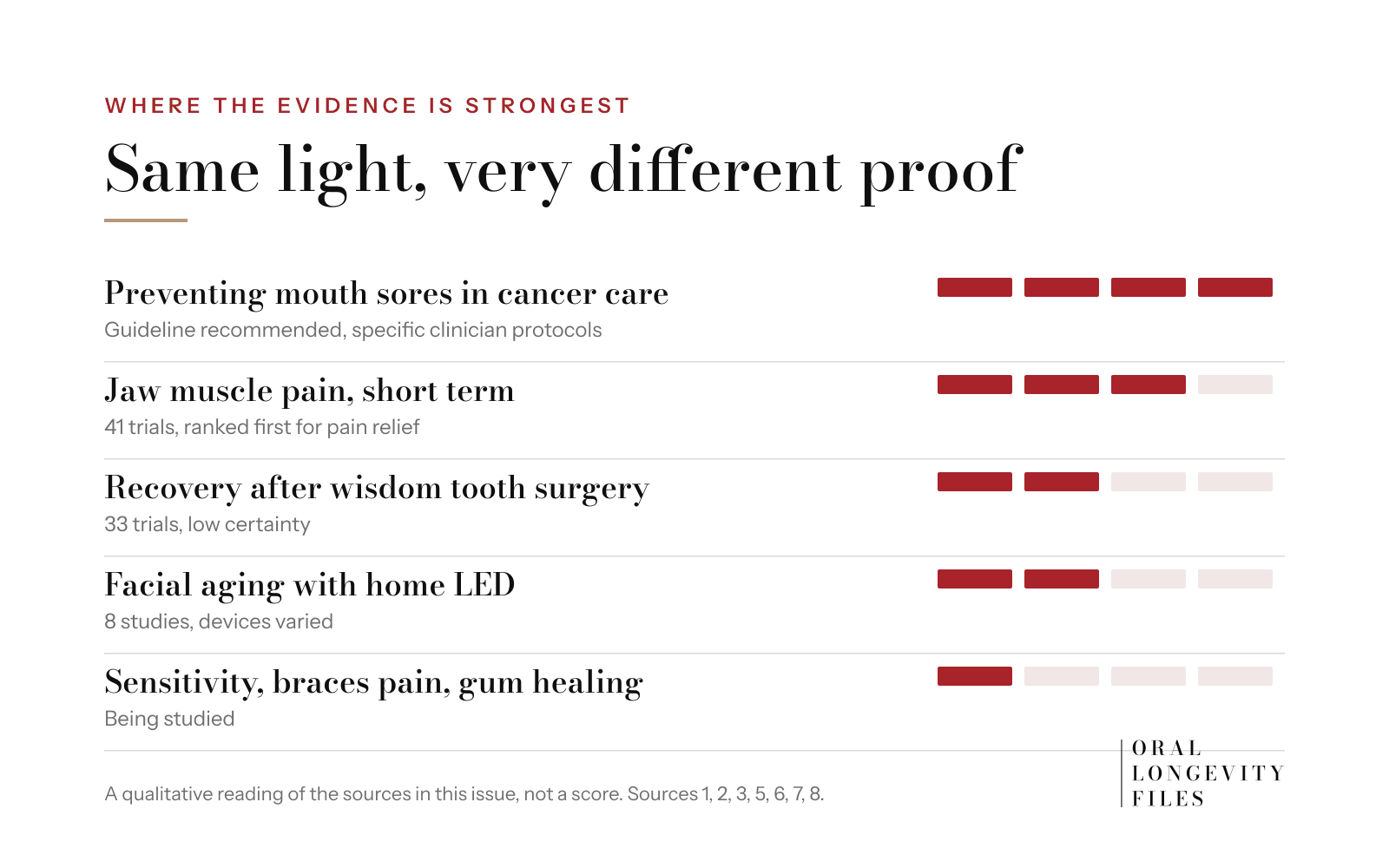
Jaw. For muscle-related temporomandibular disorders, large reviews have found photobiomodulation among the strongest options for short-term pain relief. That is encouraging, and it has limits. It does not show that light repairs a damaged joint or moves a displaced disc back into place. Start with a diagnosis, not a device. [3,28]
Start with a diagnosis, not a device.
Skin around the mouth. A 2026 review of home-LED studies found improvements in several measures of facial aging. That is a reason to look more closely at individual devices. It does not settle a claim about lip volume, lip tissue or a particular line around the mouth. [8]
Inside the mouth. The most important clinical guidance is for preventing cancer-related mouth sores, using specific intraoral protocols delivered by a clinician. A cosmetic mask, panel or light toothbrush is not a substitute for that care. Please don't put a cosmetic light device inside your mouth. [1]
Book an assessment rather than waiting it out if your jaw locks, pain followed a blow or accident, symptoms last more than two to three weeks, or eating is becoming difficult. Seek urgent care for jaw pain with chest pain, shortness of breath or sweating, and for new temple pain with scalp tenderness or vision changes, particularly if you're over 50. [13,27]
If you're receiving cancer care, ask your oncology team whether guideline-based mucositis prevention is appropriate for your treatment.
The rest is the practical part. If you want help choosing what to do next, and what you can skip, this is what you'll find below.
In the rest of this issue:
The eight-step home routine I suggest for muscle-related jaw pain, including the rest position many clinicians teach
Where red light fits alongside that routine, and the limits of the evidence
My practical picks for heat, wrinkle masks, a handheld laser, cold sores, and the panel I actually use, with links, and a plain account of what each one is and is not for
How I use a Vital Red Light panel two to three times a day, and how to read a panel listing before you try to calculate a dose
A careful note on the showerhead question
What to put on the skin, plus my intraoral picks for sensitivity and dry-mouth comfort
Three checks to run before you buy
What therapeutic-grade PBM looks like in the chair, and how to decide whether that visit is the right next step
And at the very end, for subscribers: The Red Light Protocol, with what the trials and guidelines actually used in the chair, my at-home routine and the checklist I would bring to an appointment
Subscribe for free and the Red Light Protocol at the end of this issue unlocks for you.
1. TMJ / Jaw
What the TMJ actually is
Put your fingertips just in front of your ears and open your mouth. The movement you feel is your temporomandibular joint, or TMJ. You have two, and they work as a pair every time you speak, chew, swallow or yawn.
Each joint is the rounded end of your lower jaw sitting in a shallow socket of the skull, with a small fibrous disc between them that glides forward as you open. Around it sit the chewing muscles: the masseter at the angle of the jaw, the temporalis at your temple and the pterygoids deeper inside.
TMD, short for temporomandibular disorders, is the umbrella term for problems in this system. They fall into three broad groups: joint problems, including disc problems; problems in the chewing muscles; and headaches linked to TMD. You can have more than one at the same time. Clicking without pain is common and usually needs no treatment. [13]
Why jaws start to hurt
For most people there is no single cause. Large studies point to a combination of physical load on the jaw, stress, sleep, general pain sensitivity and genetics. [13,24] These are the factors I look for most often:
Clenching and grinding. Bruxism can happen while you're awake, often as clenching while you concentrate, drive or scroll, and during sleep as grinding or clenching. Many people don't notice either one. [25]
Tired chewing muscles. Overworked, tender muscles, called myofascial pain, are among the most common sources of TMD pain. It often spreads to the cheek, temple or ear.
Changes inside the joint. The disc can sit out of its usual position, which may cause clicking and, less often, catching or locking. Arthritis, including osteoarthritis and inflammatory arthritis, can affect the TMJ as it can any other joint. [13]
Stress and poor sleep. Stress often shows up as clenching, and short or broken sleep lowers pain tolerance. Sleep bruxism frequently occurs alongside obstructive sleep apnea; reviews suggest a link but haven't shown which one drives the other. If you snore, wake unrefreshed or grind at night, tell your dentist or doctor. [26]
Daily habits. Gum chewing, nail biting, chewing pens, biting cheeks or lips, resting your chin on your hand and cradling a phone between ear and shoulder all add load. [13,27]
Injury. A blow to the face or jaw, or a strain from a very wide yawn or a long appointment with the mouth held open. [27]
Two things often get the blame. Your bite matters to me as a dentist, but current evidence doesn't support a "bad bite" or past braces as a primary cause of TMD. Grinding down teeth or rebuilding the bite to treat jaw pain isn't supported, and irreversible changes deserve a second opinion. [13,23] Forward head posture is a similar story: studies haven't found a consistent link with TMD. [29] If long desk or phone sessions make your neck and jaw feel tighter, adjusting your setup is reasonable. Just don't expect posture alone to explain the pain.
A home routine that goes beyond a warm compress
When muscle-related jaw pain flares, I suggest using these steps together for one to two weeks. [13,27]
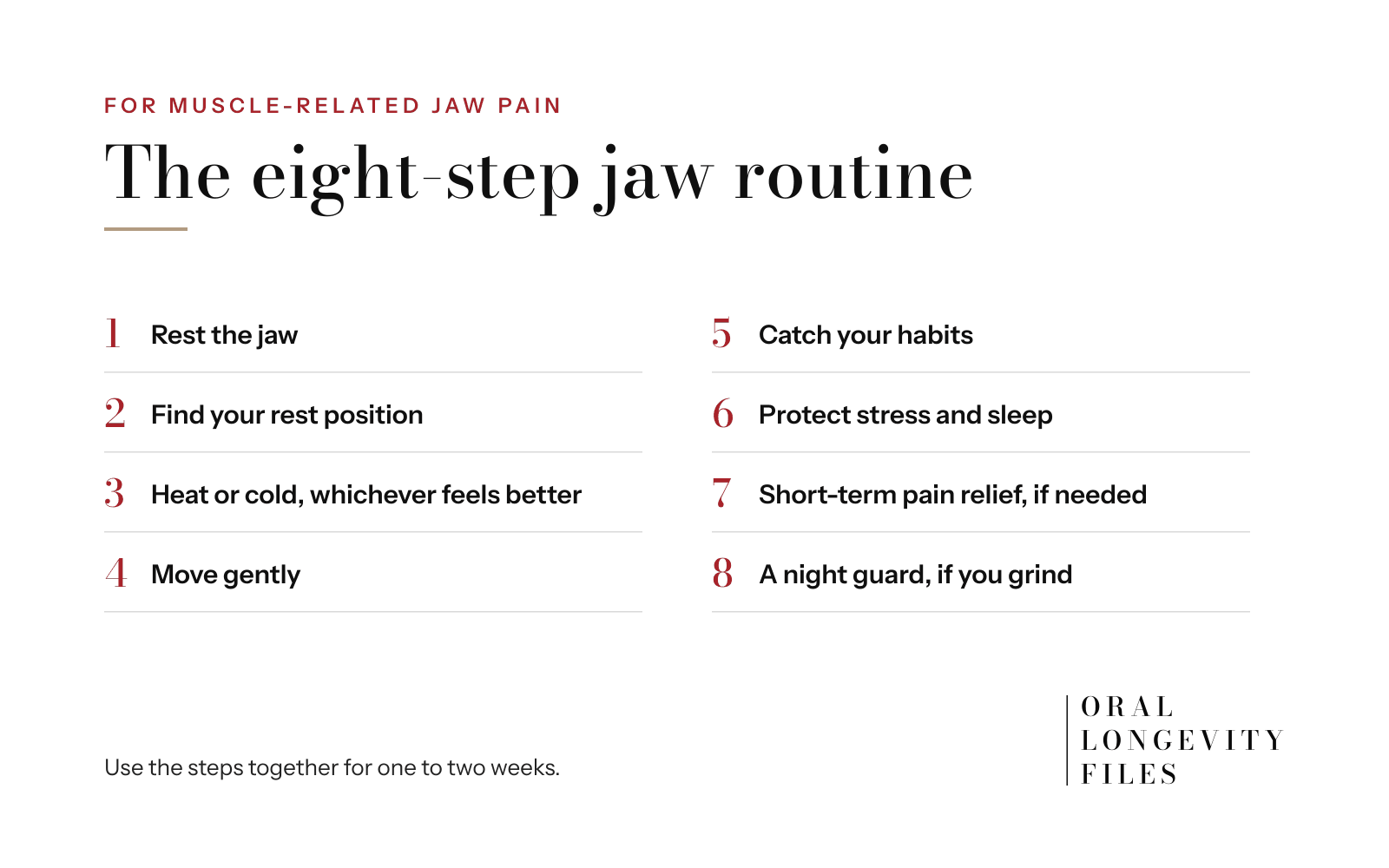
1. Rest the jaw. Choose soft foods such as eggs, soup, pasta, yogurt and fish. Cut food small, chew on both sides and avoid gum, hard crusts, tough meat and biting into whole apples.
2. Find your rest position. Lips together, teeth apart, tongue resting lightly on the roof of the mouth just behind the front teeth. Teeth should meet only when you chew or swallow. Check in at red lights, during meetings or each time you pick up your phone.
3. Use heat or cold, whichever feels better. Moist heat for 15 to 20 minutes can relax tight muscles. A cold pack for up to five minutes can help a fresh strain. Wrap either one in a cloth and never apply it directly to the skin. [27]
4. Move gently. Light massage of the cheek and temple muscles can ease tension. Slow, controlled opening helps too: rest your tongue on the roof of your mouth, open slowly in a straight line only as far as is comfortable, then close. Stop if you feel sharp pain or catching. A dentist or physical therapist trained in jaw problems can tailor exercises to you; manual therapy has the strongest evidence for improving mouth opening. [3,13]
5. Catch your habits. Daytime clenching is often the big one. Nail biting, cheek chewing, chin resting and phone cradling are next.
6. Protect stress and sleep. Relaxation practice, regular sleep times and less caffeine and alcohol late in the day support both. Psychological approaches such as cognitive behavioral therapy have evidence for TMD. [13]
7. Short-term pain relief, if needed. An over-the-counter anti-inflammatory such as ibuprofen can help for a few days. Follow the label, and ask your doctor or pharmacist first if you have stomach, kidney, heart or bleeding concerns, take a blood thinner or are pregnant. [13]
8. A night guard, if grinding is part of the picture. I fit these after an examination. A properly made guard protects the teeth and should never permanently change your bite. Evidence that guards relieve TMD pain is limited, which is another reason to choose one with a dentist rather than off the shelf. [13]
Where red light fits
Photobiomodulation works alongside these steps, not in place of them. For muscle-related TMD, a 2026 analysis of 41 trials ranked PBM highest for short-term pain relief and manual therapy highest for improving mouth opening. [3] A 2025 review of 44 randomized trials also reported less pain and better opening, but wavelengths, doses and session numbers varied so widely that the best protocol is still unclear. [28]
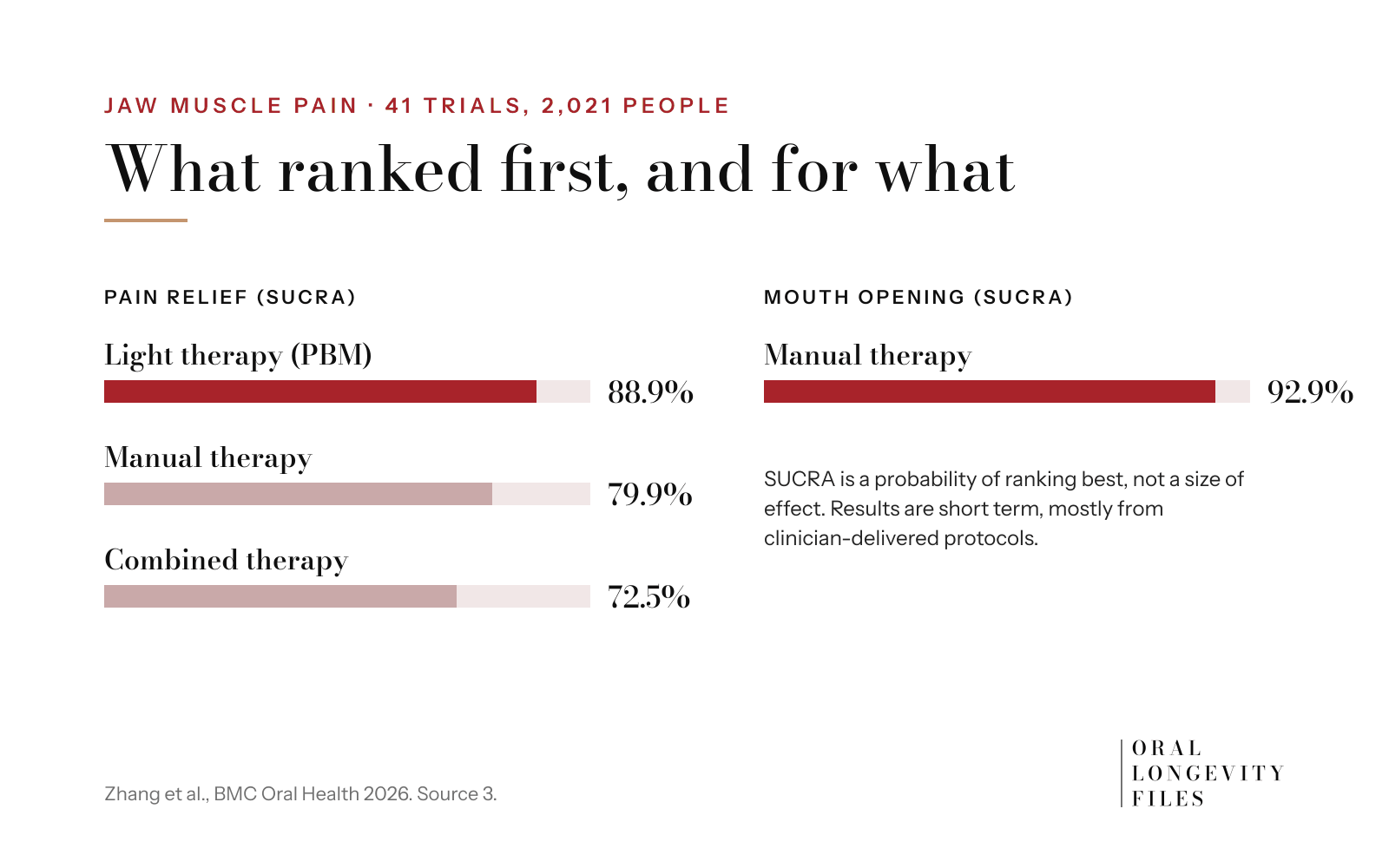
So the evidence is encouraging and still mixed in quality, mostly short-term and largely from clinician-delivered protocols. It doesn't show that light repairs a damaged joint or moves a displaced disc back into place.
Ask at your appointment: "Is this mainly muscle pain, joint pain, or both? What are we trying to improve?"
If PBM is offered, ask which protocol supports that goal and how your clinician will reassess pain and function.
There is home-device research worth knowing about: a 50-person sham-controlled study used the original Tendlite 204 for myofascial TMD. That small study doesn't establish lasting benefit or joint repair. The original is currently marked out of stock; the newer Tendlite Pro is a different model. I wouldn't transfer the older findings to it without supporting data. [22]
When to see someone sooner
Book an assessment rather than waiting it out if you notice any of these: [13,27]
Your jaw locks open or closed, or you can't open your mouth fully.
Pain started after a fall, blow or accident.
Pain lasts longer than two to three weeks or keeps coming back.
Frequent headaches, especially around the temples.
Ear pain, fullness, ringing or dizziness.
Symptoms that are getting worse, or trouble eating.
Seek urgent care for jaw pain with chest pain, shortness of breath or sweating, and for new temple pain with scalp tenderness or vision changes, particularly if you're over 50.
My practical pick
Some links here are affiliate links. I may earn a commission if you buy through them.
SKIN GYM LED Gua Sha Device. It combines red LED light, gentle heat and vibration in a gua sha shape that glides along the jaw and the chewing muscles. It's a cosmetic device and I haven't seen a TMD trial of this model, so treat it as a comfort tool for tight muscles, not a treatment for the joint. Keep it off irritated or broken skin and follow the directions.
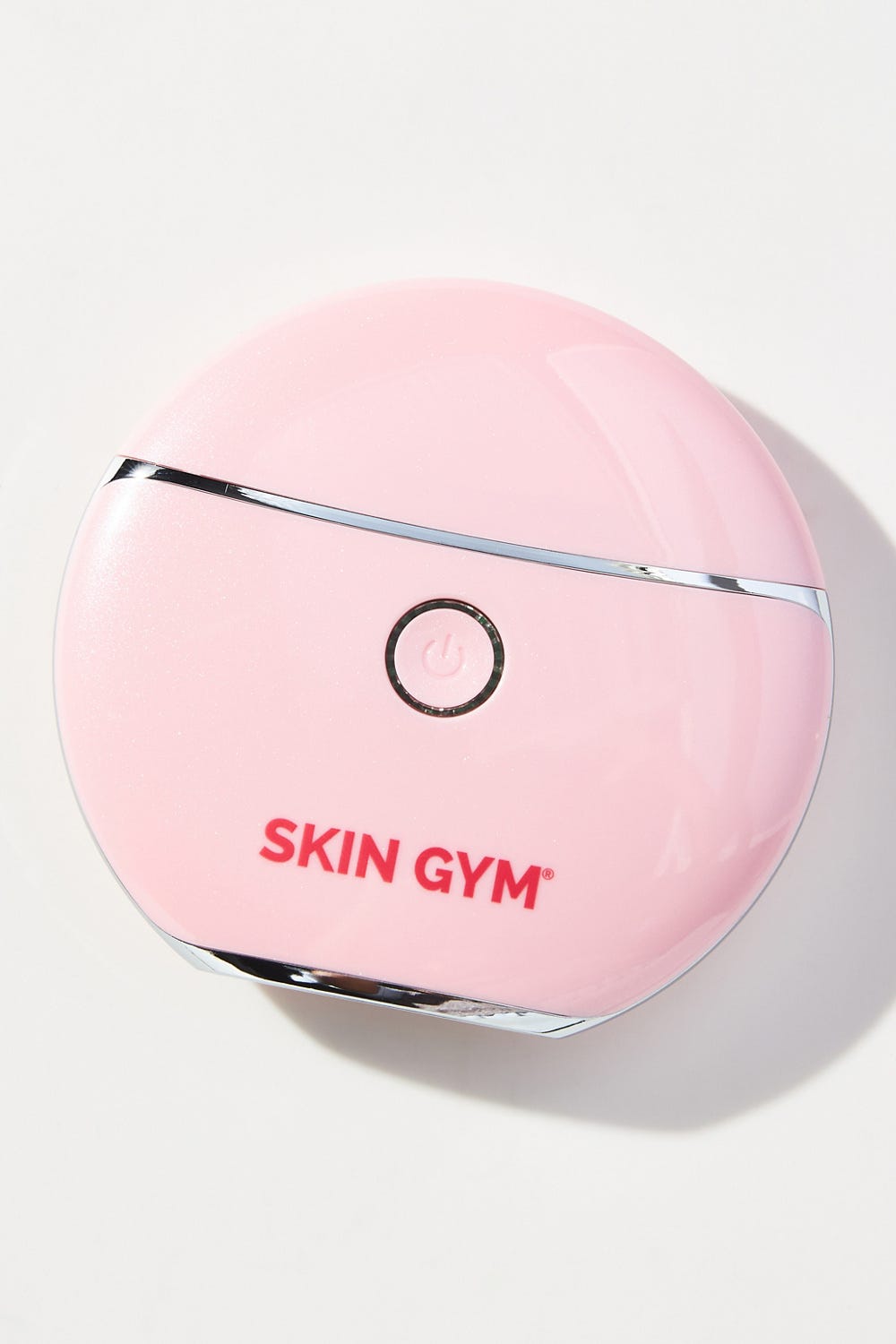
Heat can ease discomfort. It won't reposition a disc or explain why your jaw hurts.
If your jaw has been bothering you, I'd like to look at it properly. I assess the joints, the chewing muscles, your bite and your sleep together, and where it fits, I offer in-office photobiomodulation at a measured dose. You can book a consultation with me.
Getting value from this? Subscribe for free so the next issue of The Oral Longevity Files reaches you.
2. Skin / especially around the mouth
Be precise about perioral claims
Perioral skin is the skin around your mouth. The lips themselves and the lining inside the mouth are separate treatment sites.
A 2026 review of eight home-LED studies involving 365 participants found improvements in several measures of facial aging. Devices and routines varied, comparative data were limited, and diverse skin types were incompletely represented. [8]
That gives us a reason to look more closely at individual devices. It doesn't settle a claim about lip volume, lip tissue or a particular line around the mouth.
Before buying for perioral lines, ask: "Did the study measure this area, and does this model actually treat it?"
Home options with a clearer paper trail
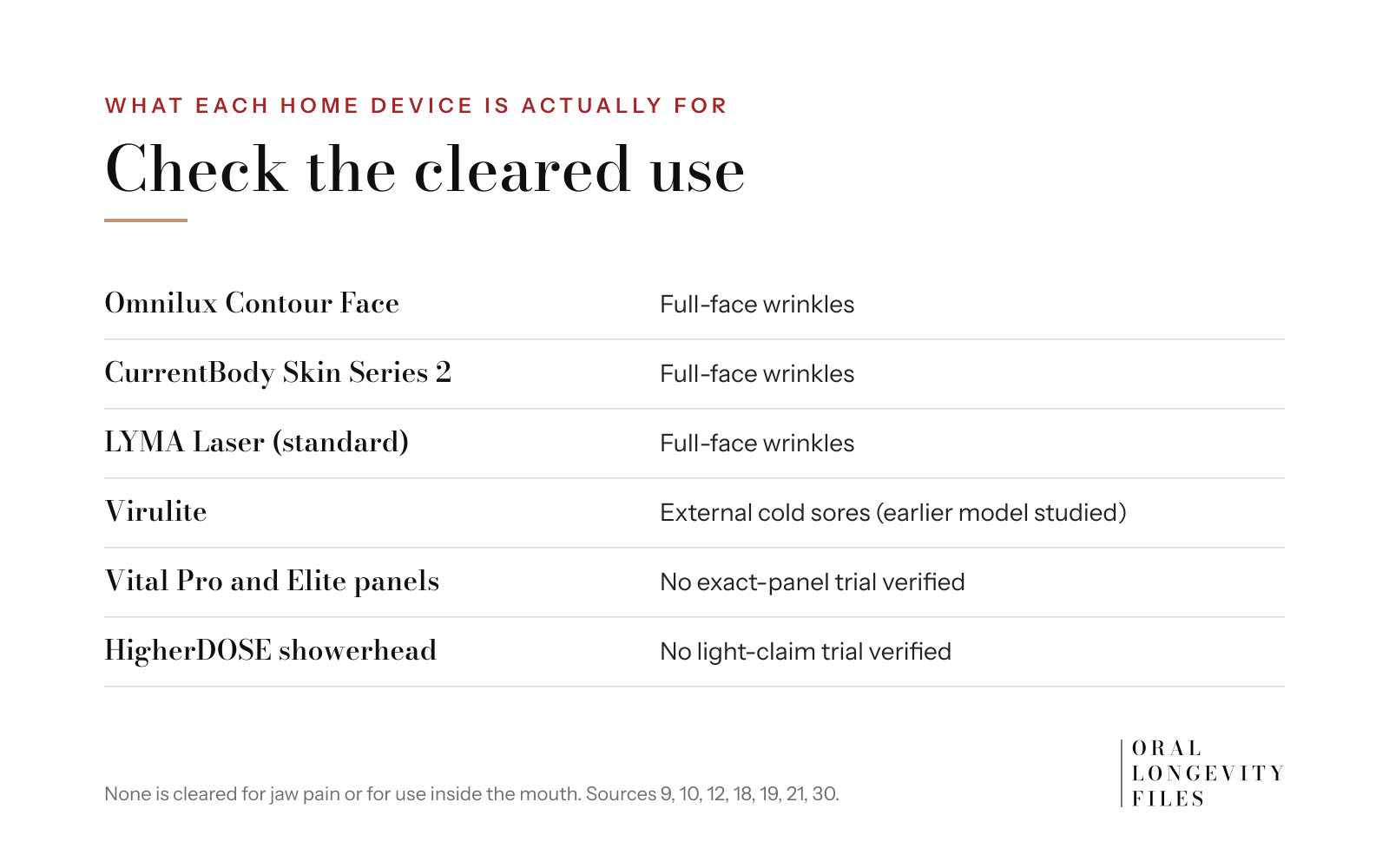
For facial wrinkles: Omnilux Contour Face. This is an optional cosmetic purchase. Its exact-model record links to clearance for full-face wrinkles, not jaw pain or oral disease. FDA clearance itself is no guarantee of a meaningful result. [9,10]
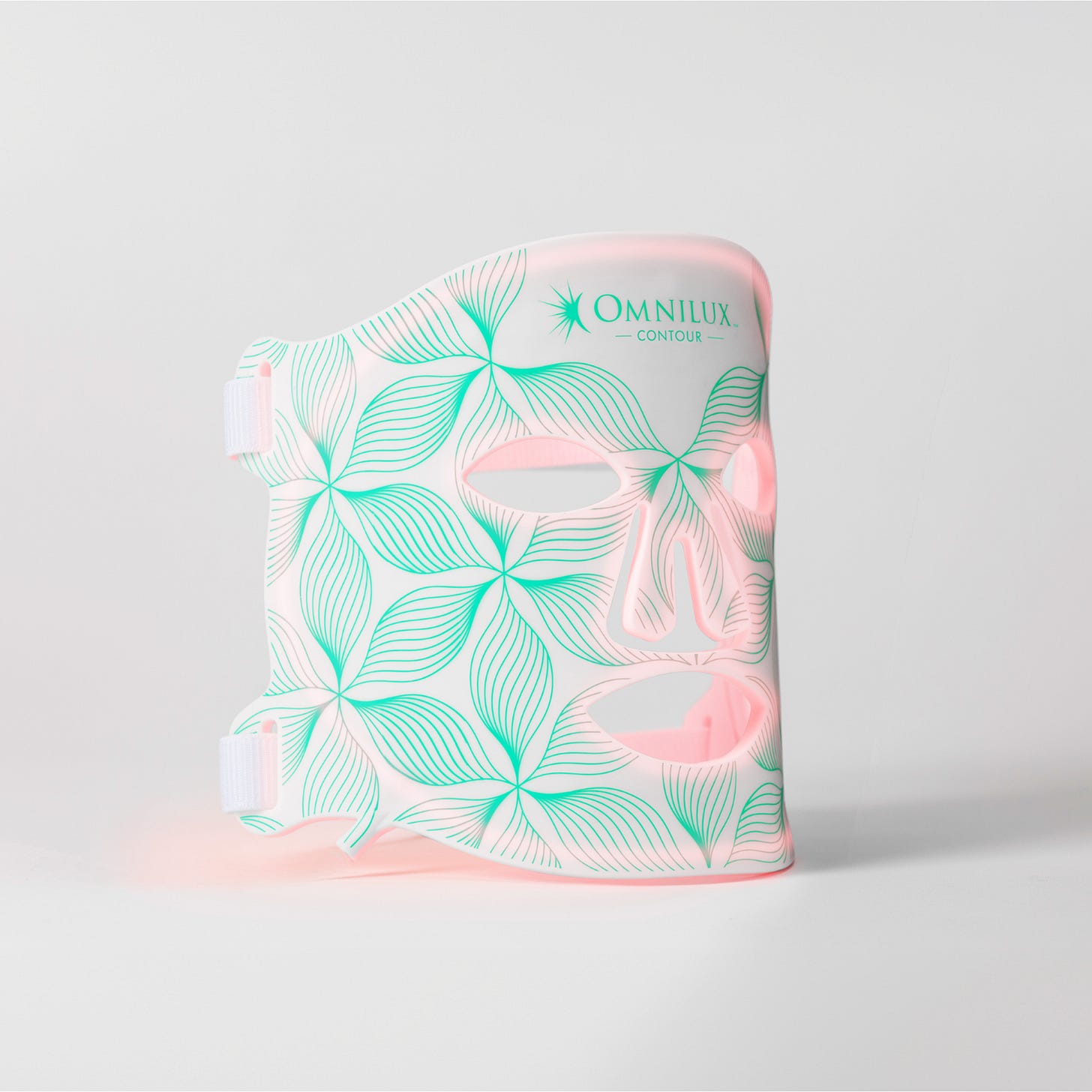
The manufacturer's report had 25 completers, no sham group and a hydrogel co-intervention. That is preliminary evidence, with uncertainty about light's contribution. Don't translate it into a promise of fuller lips or a separately proven result for every perioral line. [11]
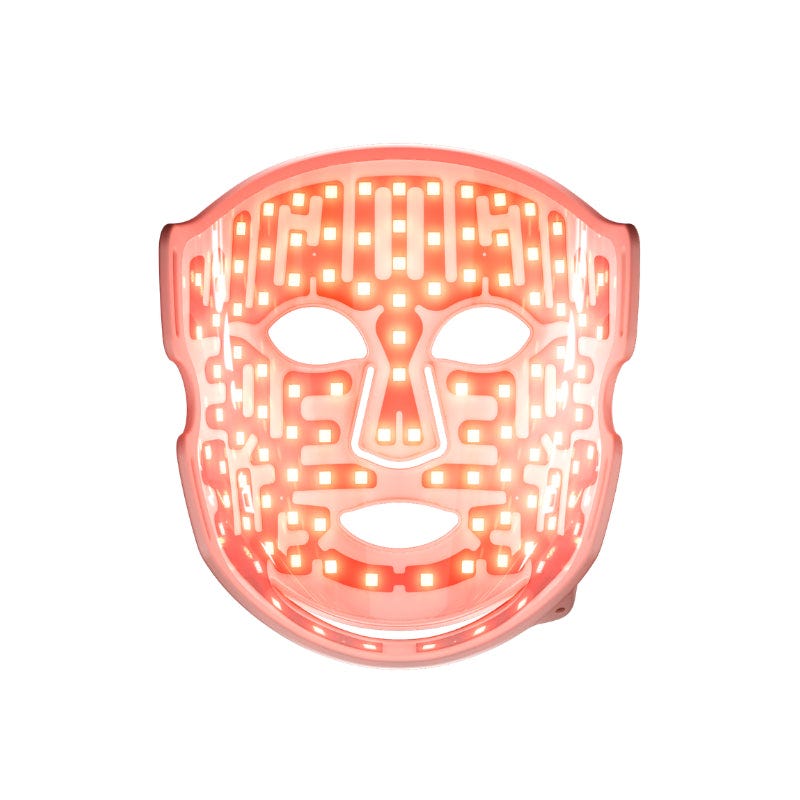
Another wrinkle-mask option: CurrentBody Skin Series 2. The exact MK-90H model has FDA clearance for full-face wrinkles. The company posts a 35-person, 56-day evaluation and a separate 30-person report. These are company-hosted reports, not verified peer-reviewed sham-controlled trials. They don't establish superiority over Omnilux or a specific lip-volume benefit. [19,20]
A different format: LYMA Laser. This is the standard LYMA Laser with an 8 cm² treatment lens, not the larger PRO. Instead of a mask or panel of LEDs, it's a handheld device you glide over, or hold on, one small area at a time, so covering a full face takes patience. Its FDA clearance is for full-face wrinkles. The FDA summary lists an 808 nm near-infrared source and a 620 nm red source at 62.5 mW/cm². [30]
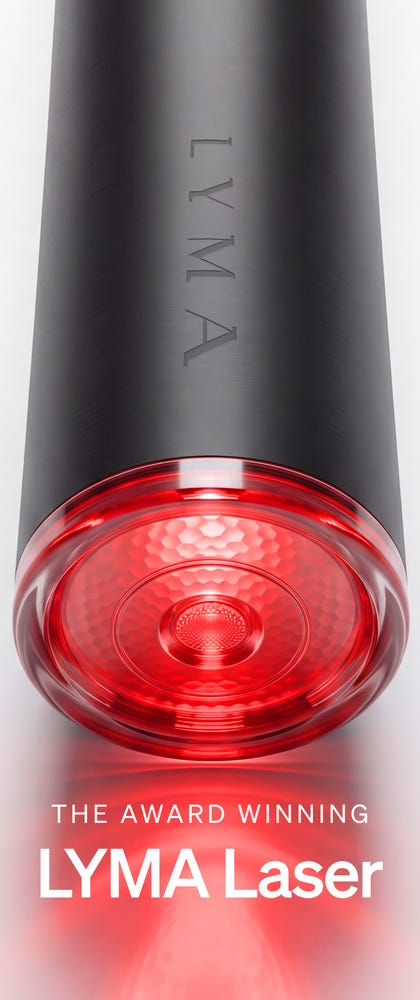
LYMA markets it as a low-level laser, while that FDA summary describes the 808 nm source as an LED, so I'd ask the company to clarify the laser distinction. The published research I found comes from LYMA's own scientific team: a preliminary 2025 study with lab tests on donated skin and 20 patients with chronic wounds, not wrinkles. [31] I haven't verified an independent sham-controlled trial of this device for wrinkles or perioral lines. The FDA summary I reviewed doesn't state its laser safety class, so follow the manual's eye-safety guidance.
FDA clearance itself is no guarantee of a meaningful result.
For recurrent cold sores on or around the lips: Virulite 2.0. The linked Amazon listing is the newer 2.0 model. The published trials and FDA review discussed here concern an earlier ViruLite device. I haven't verified that those findings establish this newer model's performance, so I would discuss it with a clinician rather than assume it is a proven upgrade. [12]
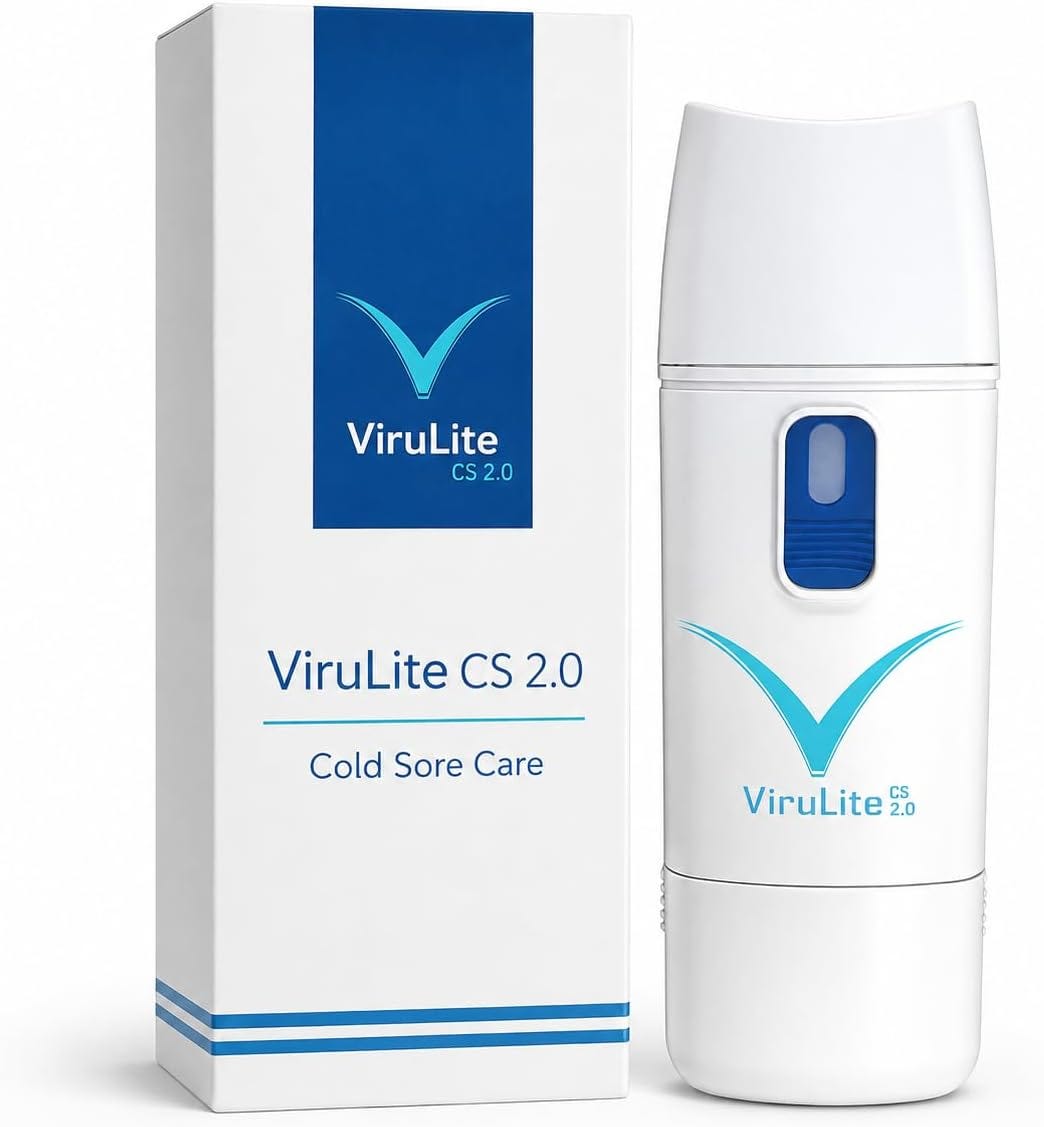
It isn't an intraoral canker-sore or cosmetic lip treatment. Read the 2.0 model's current instructions and restrictions. If you're immunocompromised, seek medical advice before using a cold-sore device. Ask about antiviral options too, especially for frequent or severe outbreaks.
The panel in my bathroom
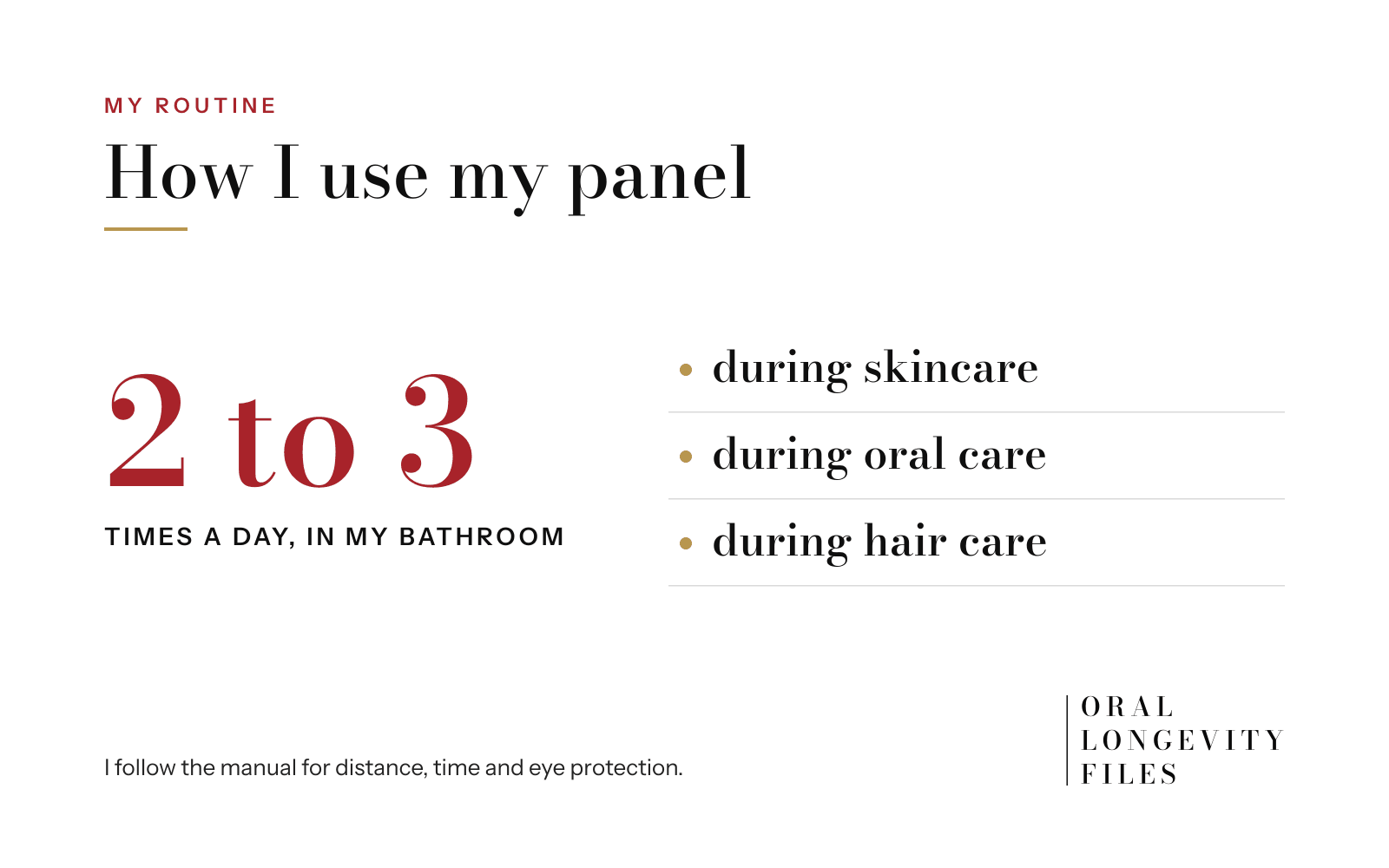
I keep a Vital Red Light panel in my bathroom, and I use it two to three times a day while I do my skincare, my oral care or even my hair care. I find it soothing, and for me it has been beneficial.
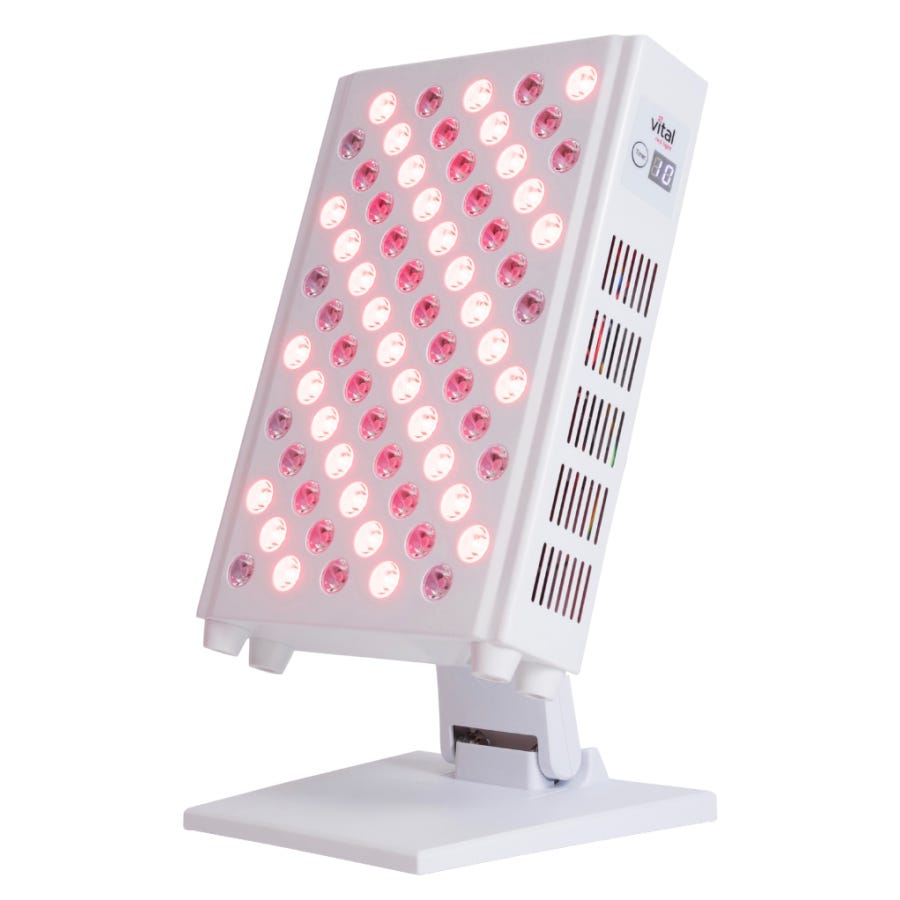
It's also reassuring to know what kind of light this is. Red and near-infrared panels don't emit ultraviolet light, the part of sunlight best known for sunburn and sun damage.
That is my experience, and I want to be clear about where it ends. I haven't verified a published controlled trial of these exact panels for perioral wrinkles, jaw pain or oral disease. I still protect my eyes the way the device guidance recommends, and I follow the manufacturer's distance and time.
The tubes in my own routine are prescribed skincare. They aren't recommendations for you. If you use a retinoid or another prescription, ask your own clinician how to fit it around light.
For readers comparing formats, the compact Vital Pro and larger Vital Elite are current options. Their main specifications list red 630/660 nm and NIR 830/850 nm. The newer 2.0 versions add wavelengths; more wavelengths alone do not establish better results. [18]
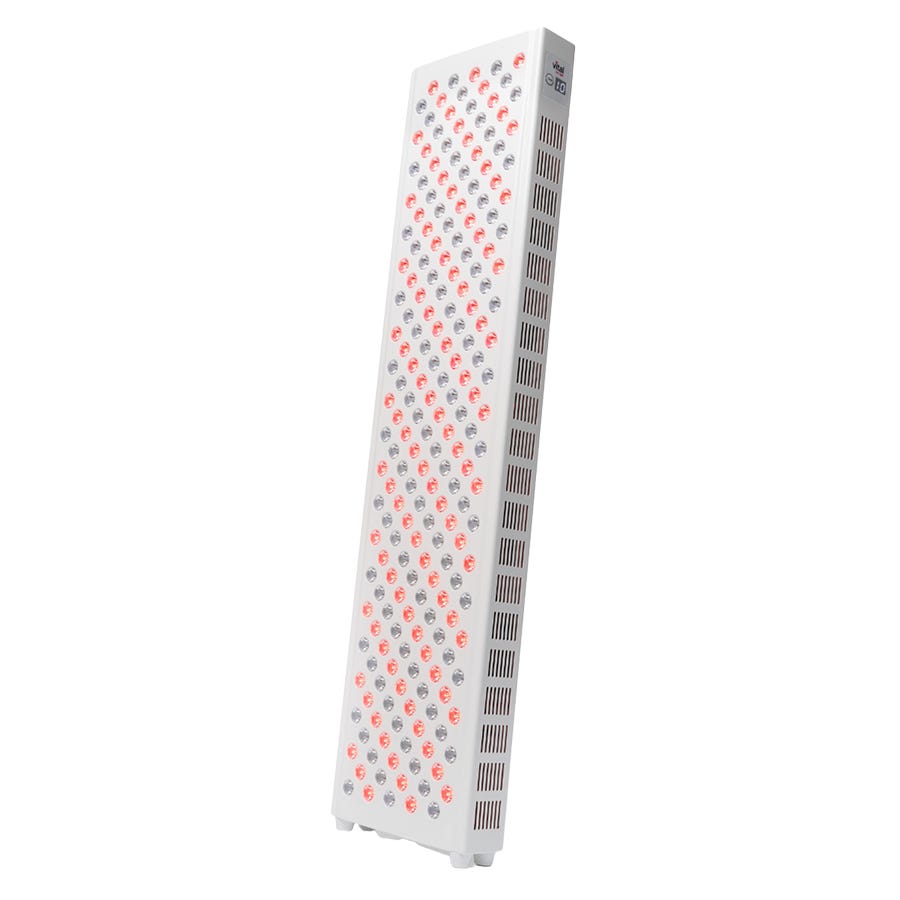
Vital advertises 150-210 mW/cm², without a measurement distance beside that figure. Its pages also give differing distance/time suggestions. Ask for the current model's manual and measured output at your intended distance before trying to calculate a dose.
A bathroom location does not make a panel shower-safe. Keep electrical devices out of wet areas unless the exact product is expressly designed and rated for that use.
A word on the showerhead question
HigherDOSE is a brand name, not advice to use a higher dose. The HigherDOSE Red Light Showerhead + Filter combines a water filter with a red/NIR light ring. Water filtration and PBM are separate functions. Evidence that a filter reduces a contaminant does not establish a skin, scalp or oral benefit from its light.
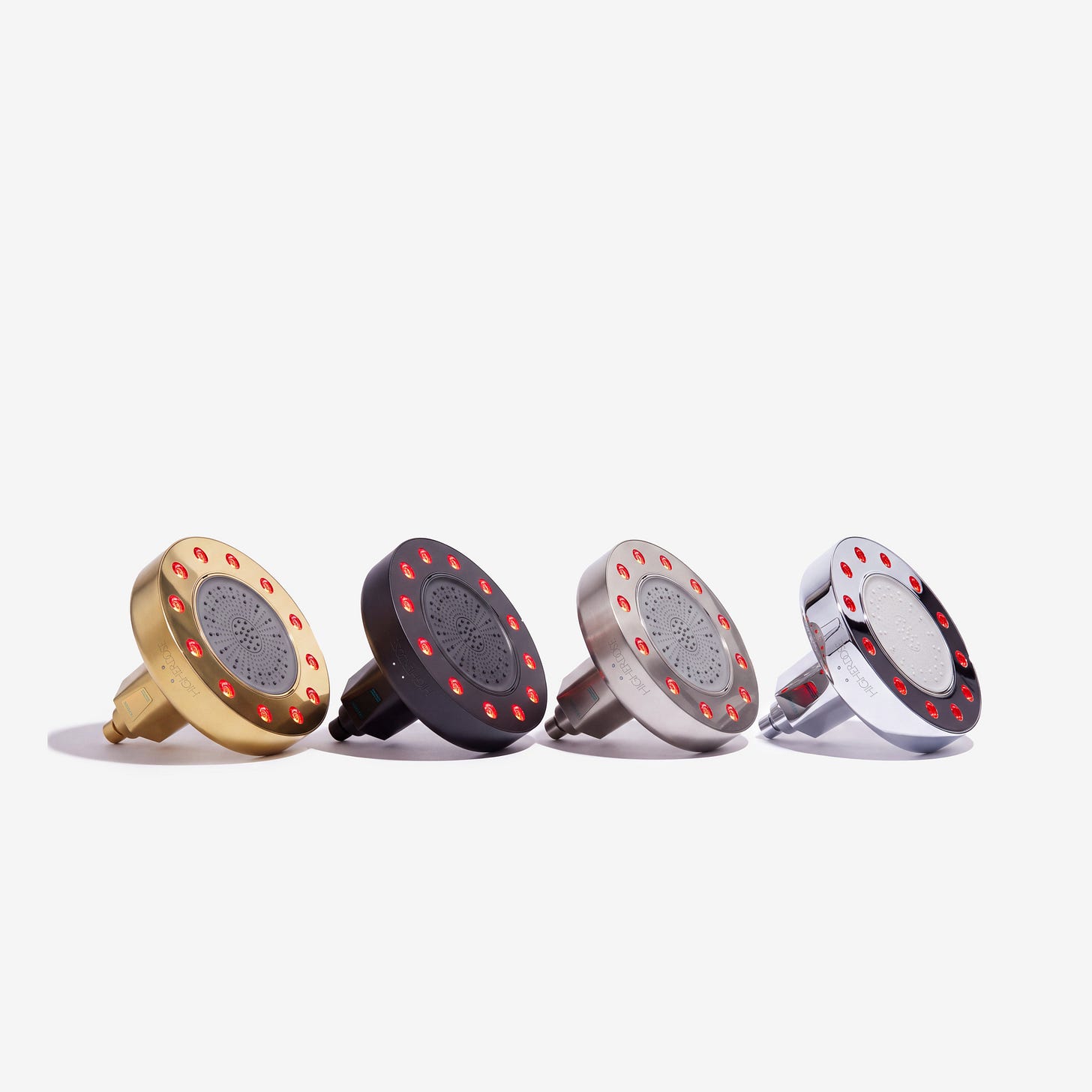
I haven't verified a product-specific controlled human trial for the showerhead's light claims. For a treatment goal, I would prioritize a documented device and exposure over convenience alone. [21]
Water filtration and PBM are separate functions.
What to put on the skin
There's no routine serum I can recommend as a proven way to accelerate home PBM. Good barrier care and sun protection still earn their place on their own evidence.
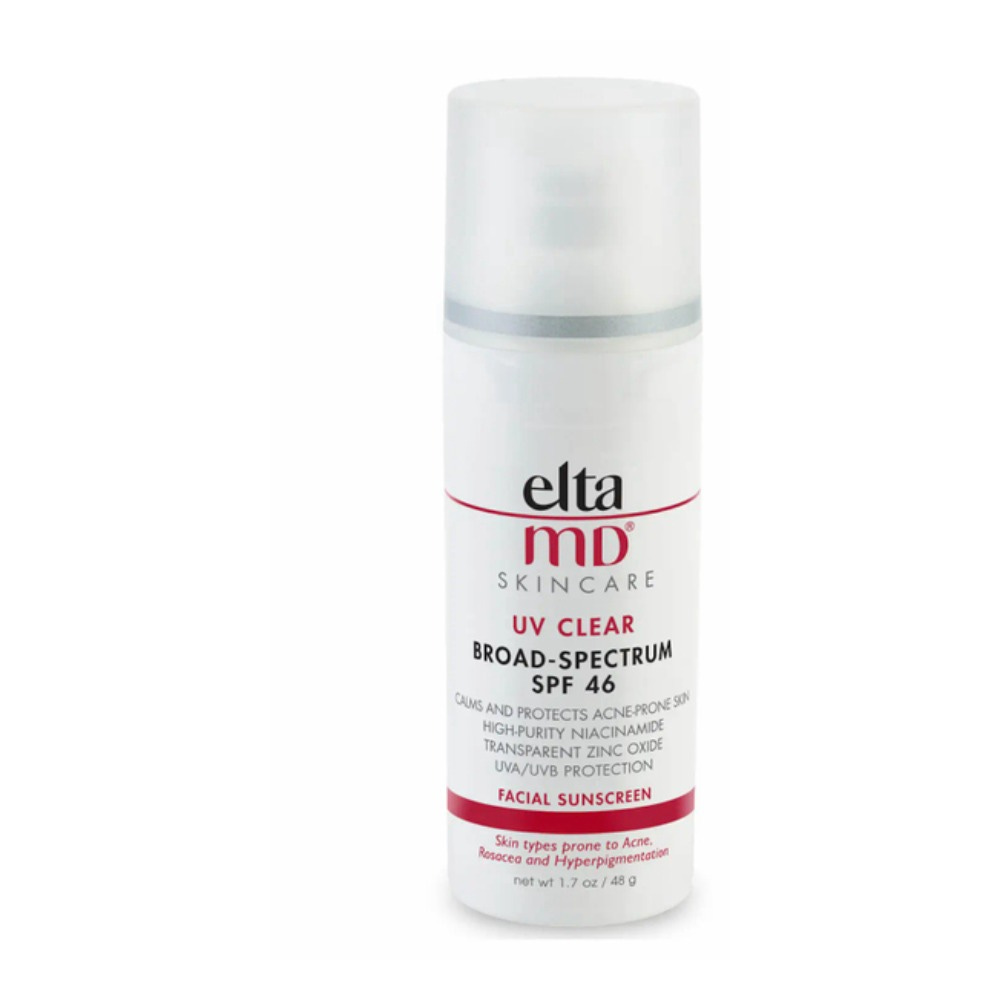
EltaMD UV Clear SPF 46 is my facial sunscreen pick here. Daily sunscreen has randomized evidence for limiting photoaging, although that trial tested a different formula. This is external-skin protection, not a lip product or LED booster. [14]
Many device manuals ask for clean, bare skin during a session, so check yours. If you use a retinoid, ask your dermatologist about combining treatments. Don't add a photosensitizer to boost home light.
3. Intraoral / inside the mouth
Cancer-related mouth sores
Oral mucositis is the painful inflammation and mouth sores that can develop during cancer treatment. This is where dental PBM has particularly important clinical guidance.
MASCC/ISOO recommends specific intraoral low-level laser protocols for prevention in adults undergoing: [1]
Stem cell transplantation with high-dose chemotherapy conditioning, with or without total body irradiation.
Head and neck radiotherapy alone.
Head and neck radiotherapy with chemotherapy.
Wavelength, dose, treatment sites and timing belong to the protocol. Oral-cancer safety considerations also matter. A clinician needs to select and deliver the appropriate care.
These recommendations don't establish a home routine for chemotherapy alone or a treatment for every sore already present.
If you're receiving cancer care, ask your oncology team whether guideline-based mucositis prevention is appropriate for your treatment.
Please don't put a cosmetic light device inside your mouth or use a light toothbrush as a substitute for oncology care.
Gums and sensitivity are different questions
Tooth-sensitivity research has promising findings, alongside substantial differences between studies. Evidence for braces-related pain remains uncertain and low quality. [5,6]
Studies of gum-wound healing and care after wisdom-tooth removal answer different questions from everyday gingivitis. They don't establish an added light benefit for a consumer toothbrush. [2,7]
Useful next step: bring persistent sensitivity or bleeding gums to your dentist and ask what is causing it. A light claim shouldn't delay that assessment.
My intraoral picks
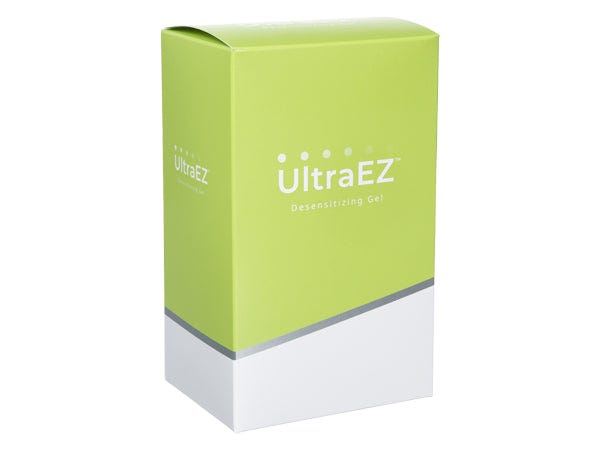
For sensitivity: Ultradent UltraEZ desensitizing gel. It pairs 3% potassium nitrate with fluoride in a gel that sits against the teeth in a tray. It's usually dispensed through a dental office, so ask your dentist whether it suits your sensitivity and how long to wear it.
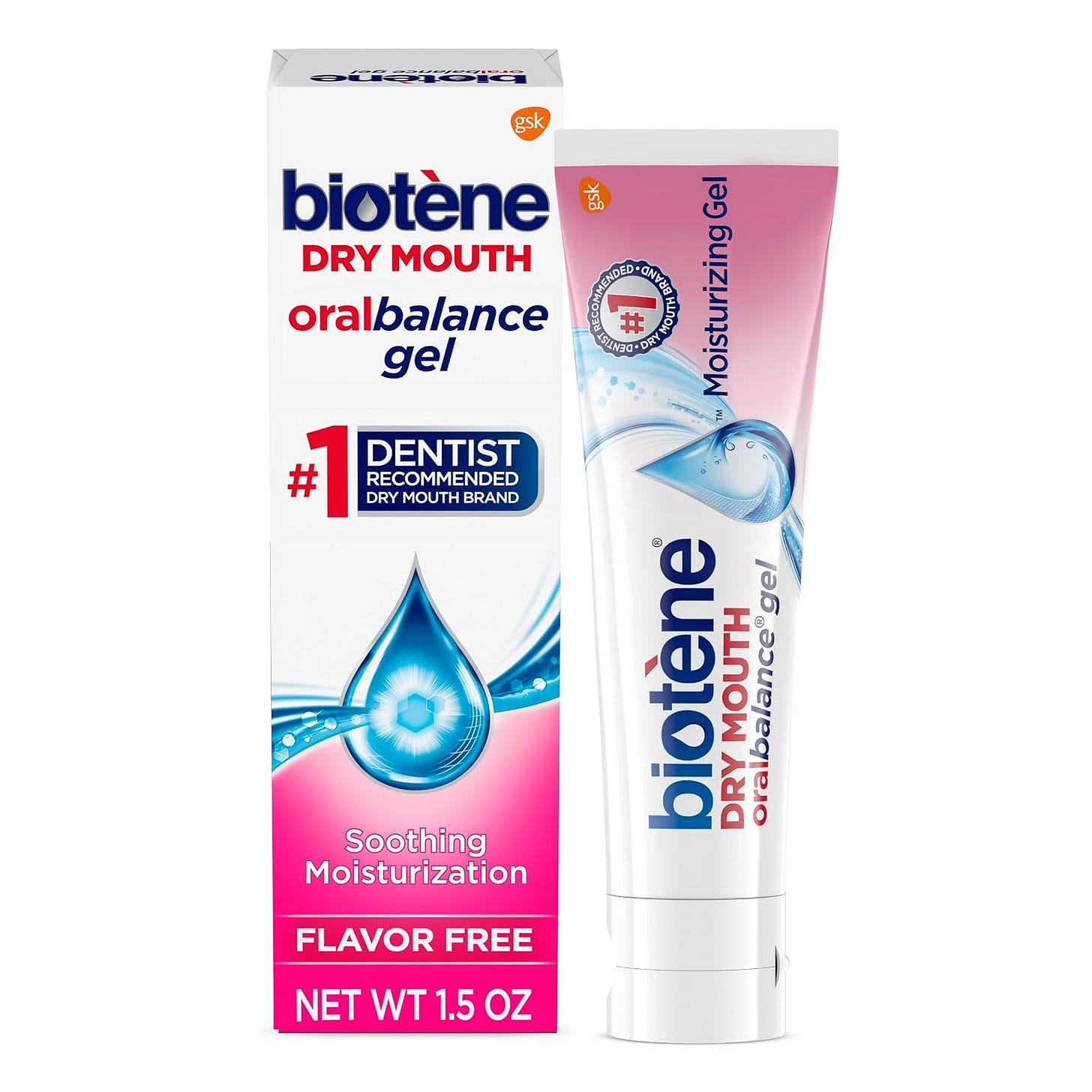
For dry-mouth comfort: Biotène Oralbalance Gel. An oral moisturizer can help with the dry, sticky feeling while you investigate the cause. This is temporary comfort, not restored saliva production or ulcer healing. During cancer treatment, clear oral products with your team. [17]
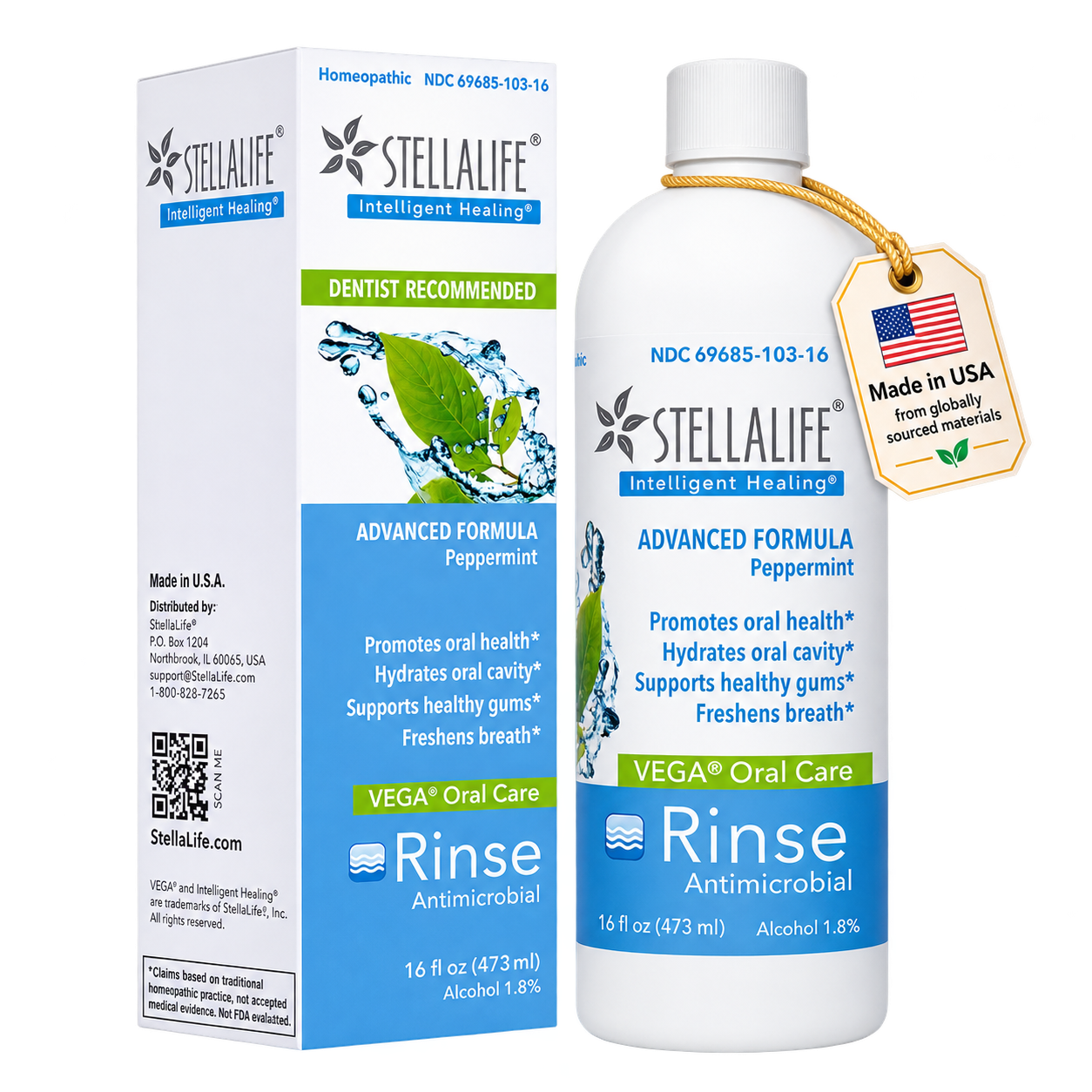
For rinsing: StellaLife VEGA Oral Care Rinse. A sugar-free herbal rinse that many dental offices send home after procedures. Use it alongside brushing and cleaning between your teeth, not instead of them.
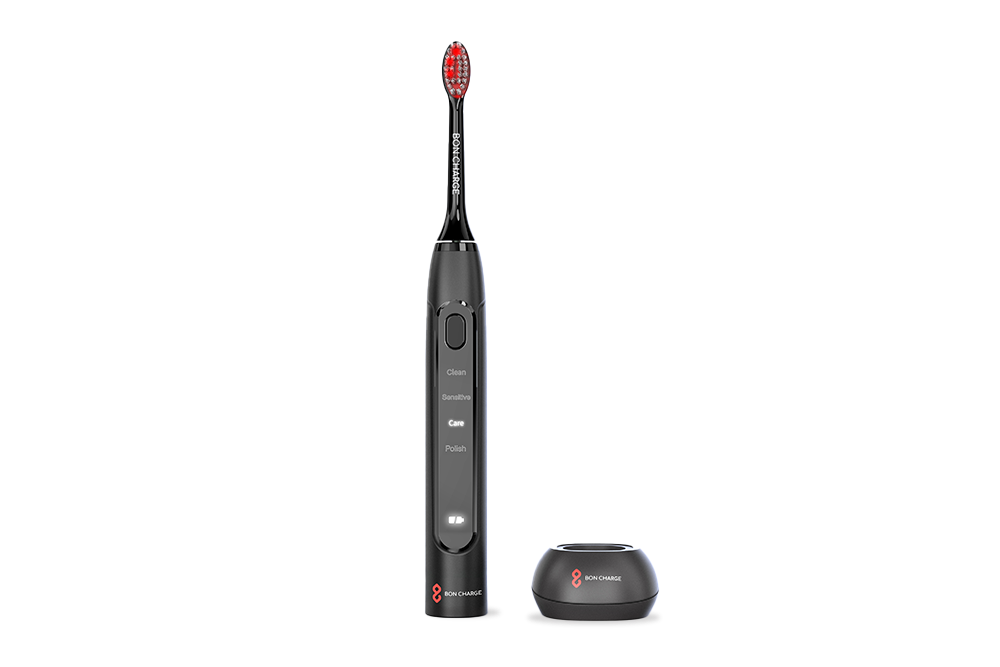
For a red light toothbrush: BON CHARGE Red Light Toothbrush. A sonic brush with 660 nm red and 830 nm near-infrared LEDs at the gumline. I haven't seen trials of this specific brush for gum outcomes, so choose it as a good toothbrush first and treat the light as a bonus.
None of these picks replaces a diagnosis or the supervised mucositis protocols above.
Medical-grade devices
I've put the devices from this issue that have an FDA clearance for a specific use in their own list: the LYMA Laser, Omnilux Contour Face, CurrentBody Series 2 mask. Cleared means cleared for a particular use, so match the indication to what you want it for. The Virulite cold-sore device is also FDA-cleared and sits in the main list.
Before you buy: three things to check
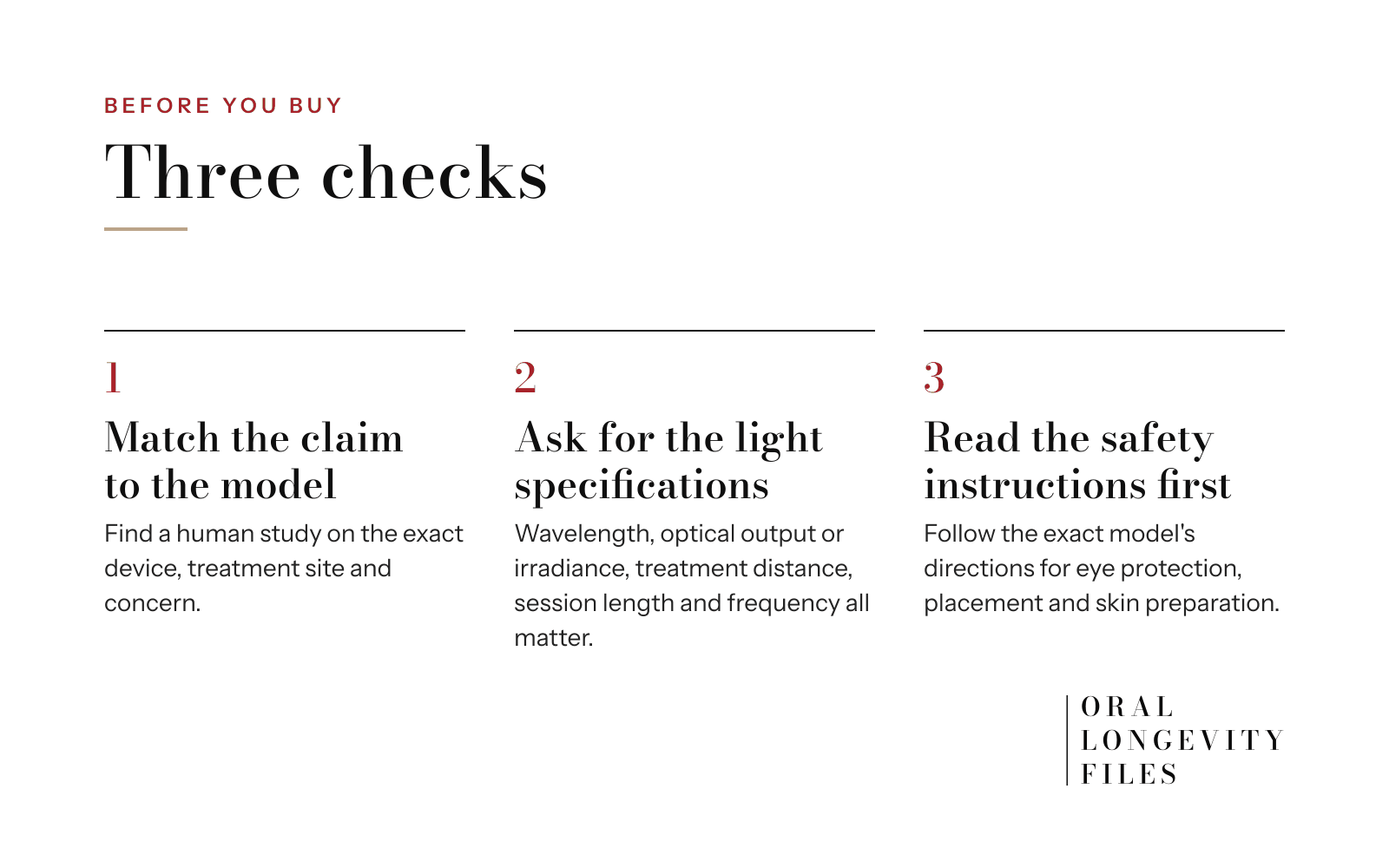
1. Match the claim to the model. Find a human study on the exact device, treatment site and concern. A brand's total study count is too broad to answer that question.
2. Ask for the light specifications. Wavelength, optical output or irradiance, treatment distance, session length and frequency all matter. Electrical wattage alone won't tell you the tissue dose. More exposure cannot be assumed to work better. [4]
3. Read the safety instructions first. Follow the exact model's directions for eye protection, placement and skin preparation. Discuss photosensitive conditions, light-sensitive medicines and other contraindications with your clinician. Don't transfer an external-skin routine into the mouth.
What about a wand or panel? A mask, handheld device and larger panel deliver light differently. Don't assume a facial routine reproduces a jaw or dental protocol. Ask your dentist or orofacial-pain clinician whether an in-office PBM approach fits your diagnosis before choosing a format.
Red and near-infrared PBM, antibacterial blue light and photodynamic treatment are different approaches. Photodynamic treatment also uses a light-sensitive substance under clinical supervision. Keep their evidence separate.
In the chair: therapeutic-grade PBM
Some of what I've described here belongs in a clinic. In the chair, photobiomodulation can be targeted to specific sites, delivered at a measured dose and, for appropriate cases, used inside the mouth.
Examples of in-office systems include dental lasers such as BIOLASE's Epic X [32,33], dedicated photobiomodulation systems from THOR Photomedicine [34,35] and Multi Radiance Medical [36,37], LightForce therapy lasers from Enovis [38], used widely in rehabilitation clinics, and professional LED platforms such as Omnilux [39,40] and Celluma [41] in skin clinics. I'm naming them to show what clinical PBM looks like, not as endorsements, and each is cleared for specific uses that vary by model.
What they have in common is what home devices can't match: a clinician choosing and measuring the dose for a specific site and, with the right equipment, treating inside the mouth.
If you'd like to see whether in-office photobiomodulation fits your case, you can book a consultation with me or call (305) 900-6880. The practice is at The 10X Centre, 18851 NE 29th Ave, Suite 301, Miami, FL 33180.
What to take with you
For your jaw, start with a diagnosis and a treatment goal.
For perioral skin, match the exact model to the goal. Protect the skin barrier and be cautious about lip-volume claims.
For inside the mouth, choose symptom-specific care and keep supervised mucositis prevention separate from home-device claims.
You can be interested in the science and still decide that a purchase can wait.
The Red Light Protocol is at the end of this issue. Subscribe for free to read it.
What to expect here
In The Oral Longevity Files, I'll keep examining the research behind oral health and facial aesthetics: what was actually studied, what you can reasonably use and what deserves more scrutiny. The aim is to help you arrive at your next appointment, or purchase, with better questions.
When The Oral Longevity Reserve™ is the right next step, I'll say so plainly here in the Files.
If this helped you choose with more confidence, subscribe so the next issue of The Oral Longevity Files reaches your inbox.
Melanie
Dr. Melanie Silvestrini, aesthetic and functional dentist
Educational information only. PBM does not replace dental or medical care. Your treating clinician can help you apply the evidence to your own situation.
Shop every product from this issue in one place.
Sources, if you'd like to look closer
Mucositis prevention: MASCC/ISOO clinical practice guidelines, 2020. PubMed.
Wisdom-tooth recovery: systematic review and meta-analysis, 2023. PubMed.
Myogenic TMD: network meta-analysis of randomized trials, 2026. PubMed.
PBM dose and parameters: Zein, Selting and Hamblin, 2018. PubMed.
Tooth sensitivity: systematic review and meta-analysis, 2021. PubMed.
Braces-related pain: Cochrane review, 2016. PubMed.
Gum-wound healing: systematic review and meta-analysis, 2021. PubMed.
Home LEDs for facial aging: systematic review, 2026. Study.
Full-face wrinkle indication: FDA K191629 clearance and summary. FDA.
Exact Omnilux model: Contour FACE TN19G, DI 05060534510128. AccessGUDID.
Contour Face study: uncontrolled manufacturer report, 2020. Study summary; manufacturer account.
External cold sores only: FDA review of the earlier ViruLite device, including clinical-data limitations and labeling; not verification of the linked 2.0 model. FDA.
TMD types, causes and conservative care: NIDCR TMD guidance. NIDCR.
Daily sunscreen and photoaging: randomized trial, 2013. PubMed.
Dry, chapped lips: dermatology guidance. AAD.
Sensitivity: 2023 network meta-analysis and UltraEZ product information. PubMed; Ultradent.
Dry-mouth care: symptoms, causes and saliva substitutes. NIDCR.
Vital panel specifications and distance context: manufacturer explanation, not an exact-panel clinical trial. Vital.
CurrentBody Series 2 MK-90H indication: full-face wrinkles; clinical testing not required for clearance. FDA K250966.
CurrentBody exact-model study reports: company-hosted 35-person and 30-person evaluations; distinguish from wider LED research. Reports.
HigherDOSE showerhead design: manufacturer FAQ and product explanation, not proof of clinical efficacy. DOSE Lab.
Original Tendlite 204 and myofascial TMD: 50-person sham-controlled study, 2019. PubMed.
Bite and TMD: systematic review of association studies, 2017. PubMed.
TMD risk factors: OPPERA studies, decade of discovery, 2016. PubMed.
Awake and sleep bruxism: international consensus on assessment, 2018. PubMed.
Sleep apnea and sleep bruxism: umbrella review, 2026; association with unclear causality. PubMed.
Self-care and warning signs: NHS temporomandibular disorder guidance. NHS.
Low-level laser for TMD: systematic review of 44 randomized trials, 2025. PubMed.
Posture, bite and TMD: review, 2012. PubMed.
LYMA Laser indication and specifications: FDA K210823 clearance and 510(k) summary. FDA.
LYMA laser study: preliminary preclinical and 20-patient chronic-wound study by the company's scientific team, 2025. PubMed.
BIOLASE Epic X (Epic 10 clearance): FDA K121286. Cleared for oral soft-tissue procedures, laser tooth whitening and topical heating for temporary relief of minor muscle and joint pain and stiffness, minor arthritis pain or muscle spasm. GUDID lists the commercial Epic X under this clearance. FDA; 510(k) record.
BIOLASE Epic X after implants: randomized clinical trial, 2024; single intraoral Epic X session reduced post-implant pain and inflammation versus sham. PubMed.
THOR Photomedicine IR lamp systems: FDA K033923 (THOR DDII IR Lamp System). Cleared to emit visible and near-infrared energy for topical heating and temporary relief of minor muscle and joint pain and stiffness, minor arthritis pain or muscle spasm; temporary increase in local blood circulation; and/or temporary relaxation of muscle. Current THOR probes list this clearance. FDA; 510(k) record.
THOR / NovoTHOR whole-body PBM in fibromyalgia: triple-blinded randomized trial, 2023; 12 NovoTHOR sessions reduced pain and improved quality of life versus placebo at end of treatment and two-week follow-up (authors include THOR Photomedicine). PubMed.
Multi Radiance MR4 Laser: FDA K171354. Cleared for adjunctive temporary relief of minor chronic neck and shoulder pain of musculoskeletal origin. FDA; 510(k) record.
Multi Radiance MR4 for neck/shoulder pain: randomized, triple-blinded, placebo-controlled trial, 2022; active MR4 PBMT-sMF reduced pain versus placebo at short-term follow-up. PubMed.
LightForce LTS (LiteCure / Enovis): FDA K173067. Cleared for topical heating for temporary relief of minor muscle and joint pain and stiffness, minor arthritis pain or muscle spasm; temporary increase in local blood circulation; and temporary relaxation of muscle (810/980 nm). No brand-named LightForce/LiteCure PubMed RCT was found for this issue. FDA; 510(k) record.
Omnilux Revive and Plus (professional): FDA K050216. Cleared to emit red and infrared energy for treatment of periorbital wrinkles. Distinct from the Contour Face home-mask clearance already listed as sources 9-10. FDA; 510(k) record.
Omnilux Revive facial treatment: single-blinded randomized controlled study, 2005; 91% of volunteers reported visible skin changes; blinded photos showed a clinical response in 59%. PubMed.
Celluma3 (Biophotas): FDA K171323. Cleared to emit visible and infrared energy for treatment of full-face wrinkles. No brand-named Celluma/Biophotas PubMed RCT was found for this issue. FDA; 510(k) record.
This issue was written for The Oral Longevity Files.